Dress Code: Inside the Underground Fashion Communities Refusing to Let Dead Aesthetics Die
Somewhere in a private Discord server with 847 members, someone just posted a photo of a 1997 Japanese streetwear catalog they found at an estate sale in Phoenix. Within minutes, the thread is alive — people identifying the brand, the season, the specific colorway of a jacket that hasn't been manufactured in over two decades. Someone offers to scan the whole thing. Someone else knows where to find a similar piece on a Japanese resale platform. A third person just wants to know the font used on the catalog's cover.
This is the fashion underground in 2025. Not runway. Not influencer hauls. Not whatever TikTok decided was trending this week. Just people who care — deeply, specifically, almost obsessively — about a very particular slice of clothing history, gathered in spaces the algorithm can't easily reach.
The Trend Machine and Its Discontents
Let's be honest about what mainstream fashion has become. The trend cycle, once measured in seasons, now moves in weeks. A color gets named. A silhouette gets declared. An aesthetic gets a portmanteau label and a Pinterest board and then, before you've even figured out how to wear it, it's over. The algorithm feeds you what it predicts you'll engage with, and what you engage with shapes what everyone else sees, and suddenly everyone is dressing in slight variations of the same three moods.
For a growing number of people — mostly but not exclusively in their twenties and thirties — this is exactly the wrong direction. They're not interested in wearing the trend. They're interested in wearing a position.
"There's a difference between liking something and identifying with it," says Ren Castellano, a 26-year-old in Los Angeles who participates in several niche fashion communities online, including one dedicated specifically to the aesthetic of early-2000s Japanese Lolita fashion and another focused on obscure American workwear from the 1940s. "When I put on a specific piece, I'm not making a fashion statement. I'm making a philosophical one."
The Spaces Where It Lives
These communities exist in the margins of the internet by choice. Private Discord servers, invite-only subreddits, Telegram channels, closed Facebook groups that somehow still have active members — the gatekeeping isn't about exclusivity for its own sake. It's about protecting the space from the thing that kills every subculture eventually: mass adoption.
"The second something gets too visible, it gets flattened," says Deja Monroe, who moderates a Discord community of about 1,200 people centered on maximalist 1980s club fashion — think post-disco New York, the Mudd Club era, Thierry Mugler before Mugler became a red carpet brand. "You see it happen every time. The aesthetics get extracted, the context gets dropped, and what's left is a costume."
The communities she's part of are deliberately difficult to find. You get in through someone who's already in. The vetting isn't aggressive, but it's real — you're expected to demonstrate genuine knowledge, genuine investment. Not clout. Not follower counts. Just knowing things.
This creates something unusual in 2025: fashion spaces where authority comes from depth of knowledge rather than size of platform.
The Sourcing Is Half the Art
One of the things that distinguishes these communities from mainstream vintage enthusiasm is the specificity of what they're looking for. It's not "vintage" as a category. It's this jacket, from this brand, from this specific two-year window, in this colorway.
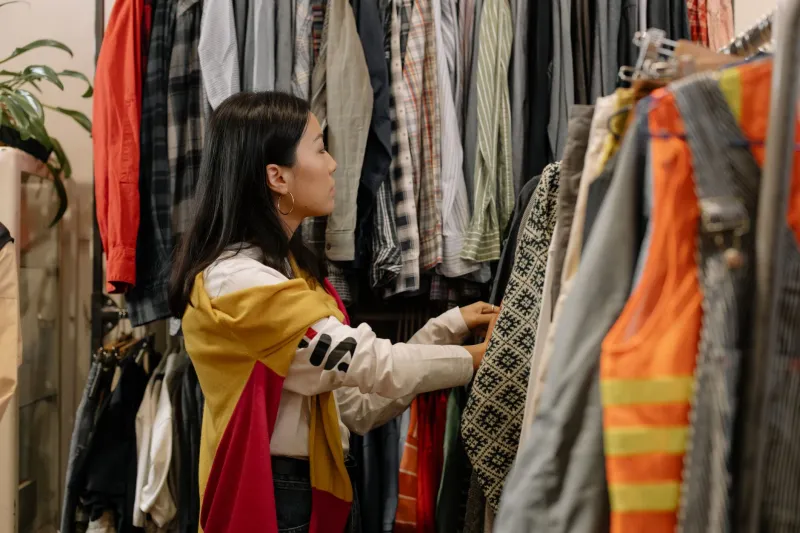
Finding those pieces requires skills that look more like archival research than shopping. Members share leads on estate sales, regional thrift stores, international resale platforms like Mercari Japan or Vinted in Europe, and private sellers who don't know what they have. There are threads dedicated entirely to authentication — how to spot a reproduction, what the original hardware should look like, what the tag placement tells you about the production year.
"I spent four months looking for a specific Hysteric Glamour jacket from 1993," says Tomás Rivera, a member of a community focused on Japanese street fashion from the '90s — brands like Undercover, early Neighborhood, the whole Ura-Harajuku lineage. "When I found it, it felt like finding a primary source document. Like something that proves a moment in culture actually happened."
That framing — clothing as historical document, as cultural artifact — runs through almost every conversation in these spaces. The clothes aren't just worn. They're preserved, studied, contextualized.
Style as Resistance, Not Rebellion
It's tempting to read all of this as rebellion — young people rejecting mainstream fashion as an act of defiance. But that framing misses something. Rebellion is reactive. What's happening in these communities feels more like construction. People building something specific and durable against the pressure of a culture that wants everything to be fast, flat, and legible at a glance.
"I don't think of what I wear as a rejection of anything," says Ren. "I think of it as a commitment. Like, I'm committing to a specific understanding of what clothes can mean and what history they carry. That's not about being against something. It's about being for something."
The communities that feel most alive are the ones organized around a genuine shared sensibility rather than a shared opposition. The 1980s club fashion Discord isn't united by hating fast fashion. It's united by a specific joy — the joy of a perfectly exaggerated shoulder pad, a particular kind of synthetic fabric that catches light in a specific way, the knowledge that a piece was worn in a room where something culturally significant was happening.
The Meetup as Ritual
For all their digital infrastructure, these communities crave physical space. Meetups — often small, often in someone's apartment or a rented gallery room — function as the real test of the aesthetic. You see how the clothes actually move. You see how people have interpreted the shared reference points differently. You see the gaps between what someone posts online and how they actually put it together on their body.
"The meetup is where you find out who actually gets it," Deja says. "Not who has the most expensive pieces. Who has the most considered ones. That's a different thing entirely."
Those events rarely get posted publicly. They exist in the closed channels, documented in photos shared only within the community. Which is, perhaps, the whole point. Some things are better when they're not for everyone.
In an era when every aesthetic eventually becomes a content category, there's something genuinely radical about a group of people who dress for each other — and for the clothes themselves — rather than for the feed. That's not nostalgia. That's a whole other kind of forward-thinking.