Your Apartment Is a Gallery and You've Known It All Along
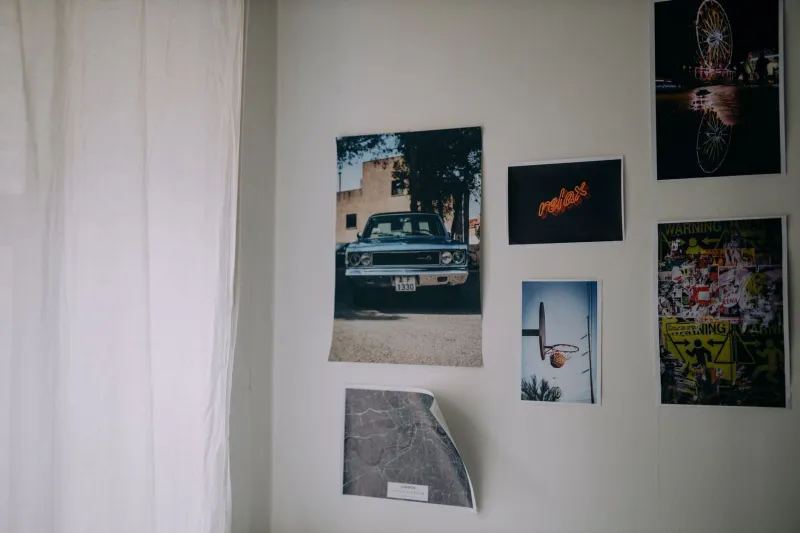
Let me describe a room you've probably seen before, maybe on Instagram, maybe in someone's actual apartment, maybe in both. There's a gallery wall — but not the matching-frames kind your parents had. These frames are mismatched, intentionally. A small oil painting of a dog sits next to a limited-edition risograph print sits next to something hand-drawn that the owner bought directly from the artist at a market in their city. On a shelf below: a piece of ceramic, a vintage art book with a cracked spine, a small sculpture that might be a joke and might be completely serious. Every single thing in that room was chosen. Nothing is accidental.
This is the curatorial apartment. And it's everywhere.
Collecting Without the Capital
When most people hear the word "collector," they picture a certain kind of person — older, wealthy, buying at auction, storing things in climate-controlled rooms. That version of collecting still exists, obviously. But it's increasingly irrelevant to understanding how young Americans actually relate to art and objects.
What's happening among millennials and Gen Z right now is a democratization of the collecting impulse. Thanks to a combination of accessible platforms — Etsy, Society6, Artsy's lower-price tiers, Instagram artists with direct DM sales, local markets and art fairs — it's genuinely possible to build a meaningful personal collection on a budget that would have been laughable in traditional art world terms. A hundred dollars can get you an original work by an emerging artist who might matter enormously in five years. Twenty-five dollars gets you a print that you'll look at every morning for the next decade.
The price point is part of the point. These aren't investments in the financial sense — or at least that's not the primary motivation. They're investments in a specific kind of daily life, one where the objects around you carry meaning, history, and a direct human connection to whoever made them.
The Wall as Autobiography
Here's the thing I find most interesting about this trend: it's less about interior design and more about identity construction. The carefully assembled gallery wall isn't primarily decorative. It's a statement. A timeline. A record of who you were when you bought each thing, what you cared about, where you'd been.
That framed print from a local artist whose opening you attended on a first date. The vintage botanical illustration you found at an estate sale in your hometown the summer after college. The small painting you bought directly from the person who made it, whose name you remember, whose Instagram you still follow. Each piece is a node in a personal narrative — one that's completely illegible to anyone else but deeply meaningful to the person living inside it.
This is self-portraiture at scale. And it's a form of storytelling that social media has made newly visible, for better and for worse.
The Documentation Problem (And Why It Doesn't Ruin Everything)
Let's be honest about the social media dimension here, because ignoring it would be naive. The curated apartment has become its own content genre — apartment tours on TikTok, shelfies on Instagram, the carefully composed corner shot that communicates taste and personality in a single image. Some of this is performative in ways that feel hollow. The room designed for the photo rather than for living in it. The collection assembled for aesthetic coherence rather than genuine passion.
But I'd push back against the cynical read that social documentation invalidates the underlying impulse. People have always wanted their spaces to communicate something about who they are. Having a camera in your pocket that lets you share that with others doesn't automatically make it fake — it just makes it visible. And there's something genuinely interesting happening in those apartment tour comments sections, where people ask about specific pieces, discover artists they'd never heard of, and start building their own collections based on what they saw in someone else's living room.
The curatorial apartment, documented and shared, has become a peer-to-peer art discovery engine. That's not nothing.
Ownership in the Age of Everything Digital
There's a deeper cultural current running beneath all of this that's worth naming. Young Americans live in an almost entirely dematerialized relationship with culture. Music is streamed. Movies are licensed. Books are rented. Even photographs exist primarily as data. The things we love — the albums, the films, the stories — are accessible but not owned, present but not permanent.
Against that backdrop, the desire to own physical art objects takes on a different weight. A painting on your wall cannot be removed from your library because a licensing deal expired. A ceramic piece on your shelf doesn't require a subscription. These objects are yours in a way that almost nothing else in contemporary cultural life actually is. They accumulate meaning over time rather than disappearing into a feed.
I think this is part of why the collecting impulse feels so urgent to so many young people right now. It's not just aesthetics. It's a form of resistance — quiet, domestic, entirely personal — against the impermanence of digital culture.
The Ethics of the Eye
One more thing worth sitting with: the curatorial apartment, at its best, is also an ethical stance. Young collectors are increasingly intentional about buying directly from artists, supporting BIPOC creators, seeking out work that reflects perspectives underrepresented in mainstream galleries. The wall becomes a values statement as much as an aesthetic one.
This isn't universal, obviously. Plenty of curated apartments are assembled with the same unconscious defaults as any other form of consumption. But the potential is there, and enough people are realizing it to make it feel like something meaningful.
Make Your Space Mean Something
If you're living somewhere right now and the walls are mostly bare, or covered in things you chose because they were cheap and inoffensive, I want to gently suggest that you're missing something. Not because your space needs to look like an Instagram post — it absolutely doesn't — but because the objects you choose to live with are doing something to you, shaping your daily experience of your own life in ways that are easy to underestimate.
Find one artist whose work makes you feel something. Buy one thing you can't quite explain but can't stop thinking about. Put it somewhere you'll see it every morning.
That's where the collection starts. And once it starts, it tends not to stop.