Drinking Is Secondary: How the Most Talked-About Bars in America Became Art Installations First
Let me tell you about the bar where I recently spent forty-five minutes without ordering a second drink.
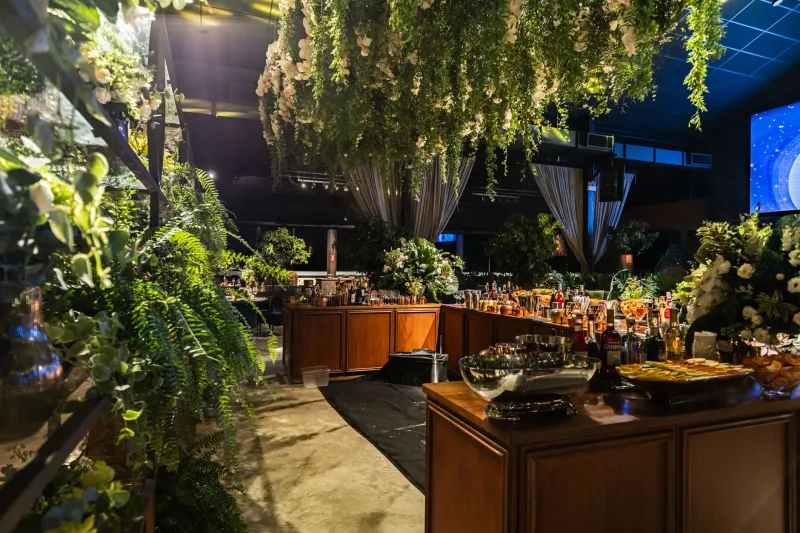
It was in New York — of course it was — tucked into a converted ground-floor space in Bushwick with no sign out front and a reservation waitlist that stretched three weeks out. The ceiling was draped in thousands of dried botanicals. Every table was a different shape, sourced from different decades. The lighting shifted so slowly you didn't notice it changing until the room felt completely different from when you sat down. The bartender, when I finally flagged them down, seemed mildly surprised I wanted another drink.
I wasn't there for the drink. Neither was anyone else.
This is the new American bar — and the cocktail, for all its careful craftsmanship, is increasingly just the ticket price for admission.
When Design Became the Main Event
The craft cocktail movement spent the better part of the 2010s convincing us that what was in the glass mattered. House-made bitters. Single-origin spirits. Ice carved to precise dimensions. It was a genuinely exciting shift, a long-overdue elevation of bartending as a serious discipline.
But something has happened since then. The drink itself — technically excellent, thoughtfully composed — has become almost assumed. A baseline. What's differentiating the most talked-about drinking establishments in cities like New York, LA, Chicago, and Austin now isn't the menu. It's the room.
"Guests today arrive having already seen the space on Instagram," says Marcus Delvalle, an interior designer who has worked on several high-profile bar openings in Los Angeles over the past three years. "They've saved it to a collection. They've sent it to three friends. By the time they walk in, they're not discovering the place — they're experiencing it in person for the first time. That's a completely different relationship to a space than we've ever had to design for before."
Delvalle's point gets at something important. Aesthetics-first bar design isn't just vanity. It's a response to a genuine shift in how people relate to going out.
The Instagram Feedback Loop (And Why It's More Complicated Than It Sounds)
It would be easy — and a little lazy — to reduce this entire trend to "places designed to be photographed." That framing is both true and insufficient.
Yes, maximalist bar design thrives on social media. A bar with a breathtaking visual concept generates organic content at a scale that no marketing budget could replicate. When a thousand guests post the same ceiling installation over a single weekend, that's reach that money can't buy. Bar owners and designers know this. They'd be foolish not to.
But here's what that framing misses: the desire to be inside a beautiful, strange, carefully considered space is not new. It predates Instagram by centuries. We have always sought out environments that transport us, that signal something about the life we're living or the person we're becoming. The camera just made that desire visible — and shareable.
"I don't design for the photograph," says Renata Osei, whose firm was behind the interiors at two of Chicago's most visually striking new bars. "I design for the feeling of being in the room. If the photograph captures that feeling, great. But a space that only works in photos fails in person. And people notice."
Maximalism as Resistance
There's also something worth examining in the specific aesthetic language that's taken hold. We're not talking about sleek minimalism here — the cold Scandinavian restraint that dominated design discourse for a decade. The bars generating the most cultural heat right now are dense, layered, almost overwhelming. Velvet in seven colors. Taxidermy and neon. Pressed tin ceilings next to brutalist concrete. Historical references scrambled and reassembled into something that shouldn't work but absolutely does.
Maximalism, in this context, reads as a deliberate rejection of the clean, optimized, frictionless aesthetic that tech culture spent years selling us as the future. It's messy and specific and human in a way that a white room with sans-serif typography is not. For younger audiences who grew up in the era of frictionless design, a bar that looks like a Victorian greenhouse exploded inside a 1970s supper club is genuinely transgressive.
"There's a hunger for environments that feel like they have a history, even if that history is invented," says Delvalle. "People want to feel like they've discovered something. Like this place existed before them and will exist after them. That's very hard to fake, but when you get it right, it's incredibly powerful."
What Are We Actually Paying For?
Here's where I want to push a little, because I think the most interesting question in all of this isn't aesthetic — it's economic and cultural.
A cocktail at one of these immersive destination bars will typically run you $22 to $28 in a major US city. That price point has been normalized remarkably quickly, and I'd argue it's because the transaction has changed. You're not paying $26 for a drink. You're paying $26 for two hours inside a curated environment, for the experience of being somewhere that someone thought deeply about, for the social currency of having been there.
That's a fundamentally different value proposition than a bar used to offer. And it tells us something real about what younger Americans are prioritizing in their entertainment spending. Experiences over objects. Curation over convenience. Environments that feel intentional in a world that mostly doesn't.
Is there something uncomfortable about that? A little, maybe. There's a version of this trend that tips into exclusivity theater — beautiful rooms designed primarily to make certain people feel like they belong to something, and others feel like they don't. That's worth watching.
But there's also something genuinely exciting happening in the overlap between hospitality, interior design, and art. The best of these spaces aren't just bars that look good. They're environments with a genuine point of view, built by people who care deeply about how a room makes you feel.
The Drink Still Matters (Sort Of)
For what it's worth, the bartenders I've spoken to are not thrilled about being upstaged by their own ceilings. Most of them got into this work because they love what they do — the chemistry, the history, the theater of a well-made drink delivered at exactly the right moment.
And the best bars in this new landscape haven't abandoned that. The drink and the room are in conversation. The cocktail menu references the visual concept. The glassware is chosen with the same care as the furniture. The whole thing is, at its best, a total work — a Gesamtkunstwerk for the age of the going-out selfie.
Which is, honestly, kind of remarkable. The American bar, a space with a long and often unglamorous history, has become one of the more interesting venues for design culture and aesthetic experimentation in the country right now.
You just have to be willing to wait three weeks for a reservation.