Pages, People, and a Place to Belong: How Indie Bookstores Became Gen Z's Favorite Hangout
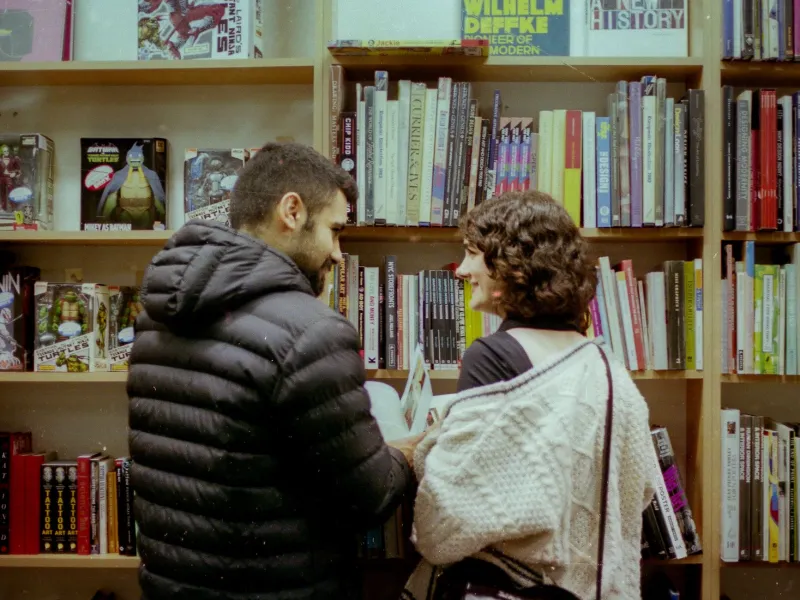
Walk into Semicolon Bookstore in Chicago on a Tuesday evening and you might stumble into a poetry open mic, a zine-making workshop, or just a loose cluster of twenty-somethings sprawled across mismatched chairs, dog-earing pages and nursing oat milk lattes. It doesn't feel like retail. It feels like somewhere you actually want to be.
That feeling — warm, unhurried, culturally alive — is exactly what's driving one of the more unexpected stories in American commerce right now. Independent bookstores are not just surviving. They're thriving. And the generation most responsible for that revival is one that supposedly doesn't read.
Spoiler: they read. They just needed a reason to show up.
The Numbers Don't Lie
The American Booksellers Association reported over 2,500 independent bookstore member locations in 2023, a figure that has climbed steadily since the early 2010s. That's a remarkable rebound for a sector that many wrote off when e-readers hit the market and Amazon swallowed the retail landscape whole.
What changed? A lot of things converged at once. The pandemic reminded people what it felt like to lose physical community spaces. Social media — BookTok specifically — turned reading into a cultural identity marker rather than a solitary hobby. And Gen Z, more than any generation before them, has proven allergic to the sterile transactional nature of big-box shopping. They want meaning. They want curation. They want to feel like somewhere was made for them.
Independent bookstores, at their best, deliver all three.
More Than a Store
"We stopped thinking of ourselves as a bookstore pretty early on," says Lexi Morales, who co-owns Drift & Margin, a 1,400-square-foot indie in Portland, Oregon. "We're a gathering point. The books are almost like the excuse to get people through the door."
Drift & Margin hosts rotating artist residencies, monthly author readings that double as social events, and a standing Sunday "slow morning" where customers are actively encouraged to sit, browse, and not feel rushed. Their Instagram, unsurprisingly, does not look like a bookstore's Instagram. It looks like a mood board for a life you want to be living.
That deliberate aesthetic isn't accidental. Morales and her co-owner spent months thinking about lighting, furniture, the smell of the space, the music playing on the speakers. "We knew that for younger customers, the environment is part of the product," she says. "If it doesn't feel right, they're not staying. And if they're not staying, they're not coming back."
BookTok and the Algorithm That Sent People Outside
It's a delicious irony: TikTok, the platform most associated with shortening attention spans and endless digital scroll, has become one of the most powerful drivers of foot traffic to physical bookstores.
#BookTok has amassed billions of views, with creators building genuine audiences around shelf tours, reading vlogs, and emotionally charged reviews. But unlike most online trends, the BookTok effect has a distinctly offline endpoint. Viewers don't just want the book — they want the experience of finding it. They want to pull a recommended title off a staff-picks shelf, flip to the first page, and decide for themselves.
That tactile, exploratory process is something no algorithm can replicate. And indie booksellers have been smart about meeting that energy. Many now maintain active TikTok presences of their own, offering behind-the-scenes peeks at new arrivals, staff recommendations delivered with genuine personality, and event announcements that feel less like marketing and more like a friend texting you about something cool happening this weekend.
The Third Place, Redefined
Urban sociologist Ray Oldenburg coined the term "third place" back in the 1980s to describe the informal gathering spaces — beyond home and work — where community actually forms. Barbershops. Coffee shops. Town squares. The kind of places where you might run into someone you know, or strike up a conversation with someone you don't.
For Gen Z, those spaces have felt increasingly hard to find. Malls are dying. Chain coffee shops feel corporate and loud. Bars require money and, often, a certain social energy that not everyone has on a weeknight. And the internet, for all its connectivity, has never quite scratched the itch for real-world belonging.
Indie bookstores, it turns out, are filling that gap with surprising effectiveness. They're quiet enough to think, interesting enough to explore, and socially permissive in a way that few spaces are — you can come alone, stay for two hours, buy one paperback, and leave feeling like you did something good with your afternoon.
"We have regulars who don't even always buy something," admits Jordan Kessler, owner of Footnote Books in Nashville. "They come in, they browse, they chat with the staff. And honestly? That's fine. That's the point. When they do buy, they buy here, because this place means something to them."
Curation as Community
There's another element that separates the indie experience from anything a big retailer can offer: genuine, human curation. A hand-written staff recommendation card is not just a sales tactic. It's a signal that a real person with real taste thought you might love this. It's the difference between an algorithm and a friend.
Many of the most successful indie bookstores have leaned hard into that distinction. They host events that reflect the specific cultural DNA of their neighborhood — a queer lit night in Boystown, a Latinx authors series in East LA, an Afrofuturism reading group in Atlanta's West End. These aren't just programming decisions. They're statements about who the space belongs to.
In a media landscape where personalization usually means a data profile, that kind of intentional, human-centered curation feels almost radical.
The Vibe Is the Value
At the end of the day, what indie bookstores have figured out — and what larger retail has mostly failed to grasp — is that younger consumers aren't just buying products. They're buying into environments, communities, and identities. The books matter, but so does the playlist, the lighting, the person behind the register who remembers what you bought last time.
For a generation that grew up being marketed to from birth, authenticity is the scarcest luxury. And the best indie bookstores are overflowing with it.
So if you haven't visited your local indie lately, maybe this weekend is the time. Bring your tote bag. Stay longer than you planned. Let someone recommend something you wouldn't have found on your own.
That's not just shopping. That's culture, in the most lived-in sense of the word.