The Longer It Takes, the More It Means: Why Young Creatives Are Choosing the Slowest Hobbies on Purpose
There's a particular kind of satisfaction that comes from finishing something that genuinely took a long time. Not a Netflix series in a weekend. Not a Spotify playlist assembled in twenty minutes. Something that required you to show up, again and again, across weeks and months, with no algorithm pushing you forward and no notification reminding you to continue. Just you, your hands, and a project that refused to be rushed.
For a surprising number of Gen Z creatives across the US, that experience has become not just appealing — it's become essential.
Patience as a Practice
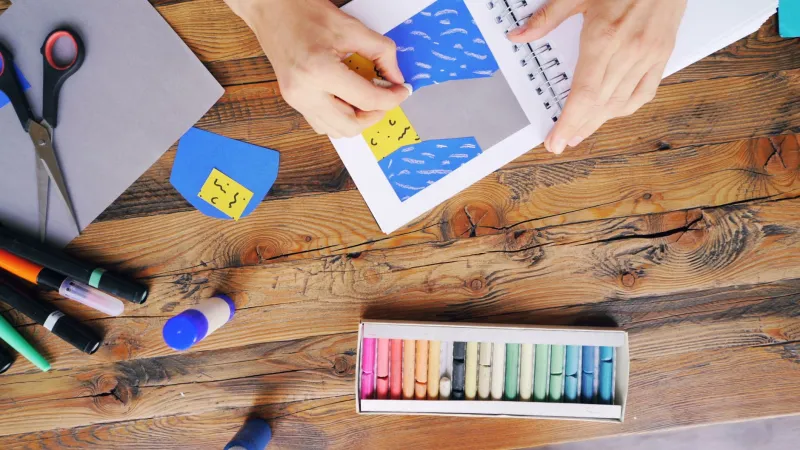
Walk through any craft fair in Brooklyn, Portland, or Austin right now and you'll notice something interesting. The booths drawing the longest lines aren't selling fast-fashion accessories or mass-printed art. They're selling hand-bound journals with exposed spine stitching that took three days per unit to complete. They're selling naturally dyed linen scarves in colors that required a full week of fermenting indigo vats to achieve. They're selling miniature room-box dioramas — tiny Victorian parlors, imagined 1970s record stores, fictional apothecary shelves — that their makers spent four months assembling with tweezers and a magnifying glass.
The people selling these things are often in their mid-twenties. And the people buying them, asking breathless questions about process and timeline, are frequently the same age.
Something is happening here that goes way beyond a craft trend.
The Invisible Labor Economy
We talk a lot about the gig economy and hustle culture, but there's a quieter counter-movement building in parallel — one that's less interested in monetizing every skill and more interested in reclaiming time as something personal. The hobbies gaining traction in Gen Z creative spaces share one defining characteristic: they cannot be hacked. You cannot prompt an AI to bind a book for you. You cannot shortcut a natural dye bath. You cannot outsource the patience required to glue a one-inch bookshelf together with archival adhesive while your hands cramp and your eyes strain.
That resistance to acceleration is, increasingly, the whole point.
"I think people are starting to understand that the time is the product," says one textile artist based in Philadelphia who posts her slow-dye process on a small but devoted TikTok account. "When I show the sixty-day timeline of a single piece of fabric going from raw linen to this deep, complex blue — people don't see that as inefficiency. They see it as proof that something real happened."
She's onto something. In an attention economy where content is produced at industrial scale and authenticity is constantly being faked, visible process has become a form of credibility. The months-long project isn't just a hobby — it's documentation that a human being was genuinely, irreversibly present.
Dioramas, Journals, and the Art of the Unrepeatable
Miniature diorama-building deserves particular attention here because it sits at this fascinating intersection of visual art, storytelling, and obsessive craft. Communities on Reddit and Instagram dedicated to the practice have grown substantially in the last three years, with American builders documenting scenes that range from hyperrealistic disaster tableaux to cozy fictional interiors that feel like someone's dream apartment rendered at 1:12 scale.
What makes dioramas interesting as a cultural object isn't just the visual result — it's the fact that each one is fundamentally unrepeatable. Every tiny texture, every hand-painted shadow, every miniature book spine with a title its maker invented represents a decision that can never be exactly duplicated. The labor is baked into the object in a way that a digital file simply isn't.
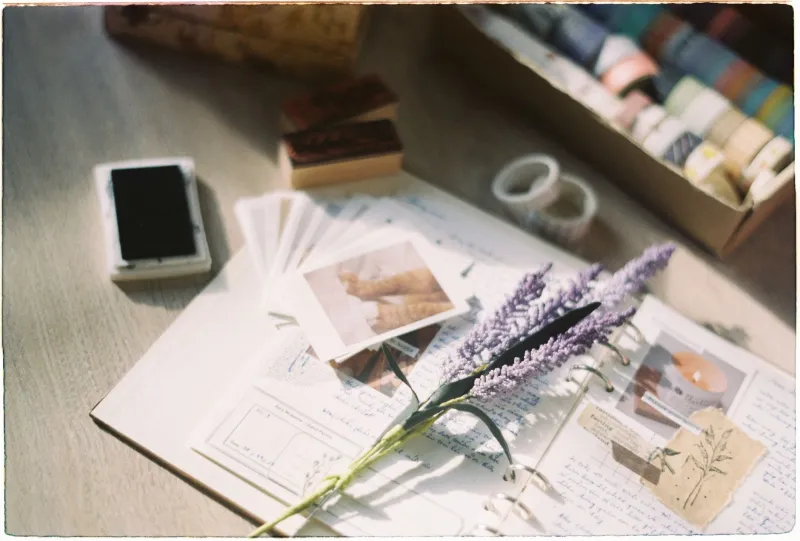
Hand-binding follows the same logic. Bookbinding communities on YouTube — some run by twenty-something creators in their college apartments — have accumulated millions of views on tutorials for Coptic stitch, long stitch, and Japanese stab binding. The appeal isn't purely aesthetic. It's the fact that a hand-bound journal carries the physical evidence of its making in every page, every thread, every slightly uneven cover. That imperfection is the signature.
Digital Rebellion Without the Manifesto
It would be easy to frame all of this as anti-tech posturing — a performative rejection of screens by a generation raised on them. But that reading misses something more nuanced. Most of the people deep in these slow-craft communities are perfectly comfortable with technology. They document their processes on TikTok and Instagram. They source materials from Etsy. They watch YouTube tutorials at 1.5x speed.
The rebellion isn't against technology itself. It's against the specific texture of digital time — the way apps are engineered to compress experience, to deliver rewards in milliseconds, to make anything that requires sustained attention feel like a malfunction.
Choosing a four-month hobby is less about rejecting the phone and more about carving out a category of experience that the phone simply cannot replicate or replace. It's a deliberate partition. This thing, over here, belongs entirely to me and to time.
There's also a mental health dimension that practitioners talk about openly. The repetitive, focused work involved in these crafts — the rhythmic pull of a bookbinding needle, the meditative stirring of a dye vat, the micro-focused placement of a miniature object — produces a state that a lot of people describe in terms that sound a lot like flow. Not the gamified pseudo-flow of a well-designed app, but something slower and more physical. Something that leaves you genuinely tired in a way that scrolling never does.
Status, Redefined
Here's the part that feels genuinely new: in certain creative communities, the length of a project has become its own form of cultural currency. Finishing something fast isn't the flex. Finishing something that took embarrassingly, almost stubbornly long — that's the flex.
Posting a completed hand-dyed textile with a caption that reads "eight weeks, forty-seven dye baths" isn't humble-bragging. It's a statement about what you chose to do with your attention in a world that was constantly competing for it. The time investment is the value proposition.
This reframing matters because it pushes back against a pervasive cultural assumption — that efficiency is always the goal, that the fastest path to a finished object is the best one. These slow-craft communities are arguing, pretty convincingly, that the path is actually the point. That the months spent on something are not a cost to be minimized but an experience to be inhabited.
What Gets Made When You're Not in a Hurry
There's a specific quality to objects made slowly and with sustained intention. It's hard to articulate but easy to recognize. A hand-bound journal that took its maker three days feels different in your hands than something assembled by a machine in three seconds — not just because of the physical variations, but because of what you know about its history.
Gen Z didn't invent slow craft. But they're bringing something specific to it: a self-awareness about why slowness matters right now, in this particular cultural moment, when everything else is racing. They're not romanticizing the past or rejecting the present. They're building a third option — one stitch, one dye bath, one tiny hand-painted wall at a time.