Ink, Pressure, and Intention: The Quiet Revolution Happening Inside Letterpress Studios
There's a specific sound that happens when a letterpress platen meets an inked form — a soft, decisive thunk that you feel as much as hear. It's not dramatic. It's not flashy. But ask anyone who's spent time inside a letterpress studio, and they'll tell you that sound is basically the whole point.
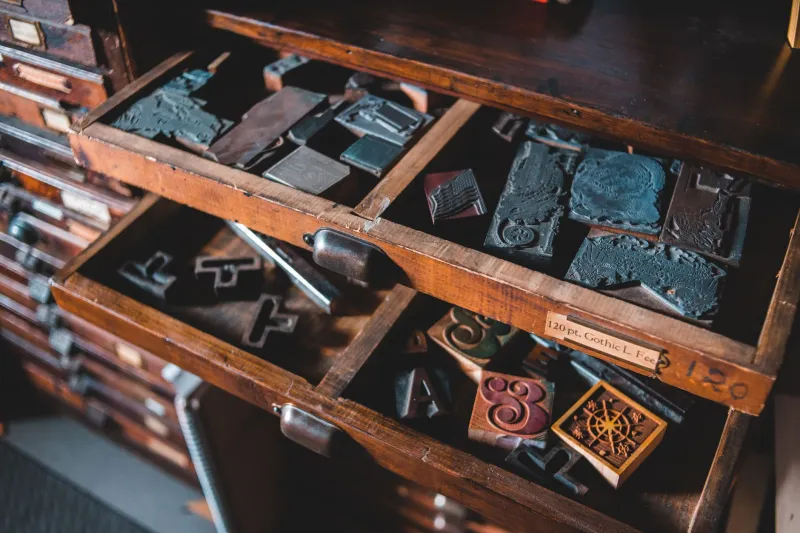
Letterpress printing dates back to Gutenberg. It's a process that involves arranging individual metal or wood type characters by hand, locking them into a frame, rolling ink across the surface, and pressing paper against it with enough force to leave a slight impression in the sheet. For most of the twentieth century, it was considered a dead art — a relic made obsolete by offset printing, desktop publishing, and eventually the internet. And then something unexpected happened: Gen Z found it, fell completely in love with it, and refused to let it go.
Studio waitlists are growing. Independent letterpress shops are opening in cities like Portland, Brooklyn, Chicago, and Austin. Introductory workshops sell out within hours of being posted. The people showing up aren't just hobbyists — they're graphic designers, poets, illustrators, and anyone who has spent enough hours staring at a screen to desperately want something real under their hands.
The Anti-Algorithm Aesthetic
To understand why letterpress is having this particular moment, you have to understand what it's pushing back against. Digital design tools are extraordinary. They're also infinitely replicable, endlessly adjustable, and completely frictionless. You can undo anything. You can copy anything. You can distribute anything to a million people in seconds without a single physical object ever existing.
Letterpress is the exact opposite of all of that.
Every decision you make — the typeface, the weight of the paper, the color of the ink, the depth of the impression — is a commitment. You can't hit ctrl-Z after you've pulled a print. Each sheet comes off the press slightly different from the last, carrying the particular pressure of that moment, the humidity in the room, the exact amount of ink on the rollers. That variability isn't a bug. For the people drawn to this process, it's the entire selling point.
"People are hungry for things that have a fingerprint," says one Chicago-based printer who started her shop after a decade working in UX design. "Everything digital looks the same after a while, even when it's technically beautiful. Letterpress looks like a person made it. Because a person did."
The Studio as Third Space
What's interesting about the letterpress revival isn't just that people are buying prints — it's that they want to be in the room where it happens. Studios across the country are reporting that their workshop programs are often more popular than their custom printing services. People aren't just consumers of this art form. They want to participate in it.
There's something socially significant about that. In an era when most creative work happens in isolation — alone at a laptop, alone in a home studio, alone in the soft glow of a monitor — letterpress printing is inherently communal. Studios are loud and tactile and full of people making mistakes and learning from them in real time. You ask the person next to you why their impression is uneven. You share a type cabinet. You celebrate when a run of 50 cards finally comes out clean.
For a generation that grew up online but increasingly craves in-person connection with actual stakes, that dynamic hits differently.
At a studio in Brooklyn, weekend workshops routinely attract participants in their mid-twenties who describe the experience in almost therapeutic terms. "I work in tech," one attendee explained after a recent session. "I spend all day making things that don't physically exist. Coming here and making something I can actually hold — that's not just a hobby. It's necessary."
Type as Creative Language
Beyond the social dimension, letterpress is also attracting a wave of people who are genuinely obsessed with typography as a craft. The resurgence of interest in type history — spurred in part by design TikTok, YouTube deep dives, and a broader cultural appreciation for pre-digital aesthetics — has given younger printers a rich vocabulary to work with.
Hand-setting type from a California job case isn't just nostalgic. It's an education in how letters were designed to work together, how spacing changes the entire mood of a word, how the weight of a typeface communicates something before a single word is consciously read. Designers who've spent years working digitally describe picking up physical type for the first time as genuinely revelatory — a way of understanding letterforms that no software tutorial ever quite delivered.
Independent type foundries, which cast and sell new metal type, have seen a corresponding uptick in orders from younger buyers. Vintage wood type — the oversized, display-weight characters used for posters and broadsides — has become seriously collectible, showing up at estate sales and on eBay with price tags that reflect genuine demand.
Objects Worth Keeping
There's also a market dimension worth acknowledging. Letterpress printing has found a devoted audience in the stationery and paper goods world, where consumers are increasingly willing to pay more for objects that feel considered and handmade. Wedding invitation suites, holiday cards, art prints, poetry broadsides — the market for beautifully pressed paper goods is real and growing, driven partly by a broader cultural reassessment of what's worth spending money on.
In an economy where digital content is essentially free and infinitely abundant, physical objects made with skill and intention carry a different kind of value. A letterpress print isn't just a picture. It's evidence of a process. It has texture. It has history. It will look good in thirty years.
That durability matters to a generation that's grown up watching digital platforms disappear, social media feeds get buried, and online content evaporate without a trace. A letterpress print on good cotton paper will outlast any Instagram post. That's not a small thing.
Press On
What's most striking about the letterpress revival is how genuinely joyful it is. This isn't a trend driven by irony or nostalgia performance. The people filling these studios aren't doing it to seem interesting — they're doing it because the process itself is deeply satisfying in a way that's hard to articulate and impossible to fake.
The thunk of the platen. The smell of oil-based ink. The slight give of a well-made sheet of cotton paper. The moment you peel back a freshly pulled print and see the impression sitting clean and sharp in the surface. These are sensory experiences that no screen can replicate, no matter how high the resolution.
In a cultural moment defined by speed, abundance, and frictionless consumption, letterpress printing offers something genuinely countercultural: slowness, scarcity, and the irreplaceable satisfaction of making something by hand that didn't exist before you made it.
That's not a step backward. That's a pretty radical vision of what creativity can look like going forward.