Burned With Intention: How Mix CDs Became Gen Z's Most Radical Act of Affection
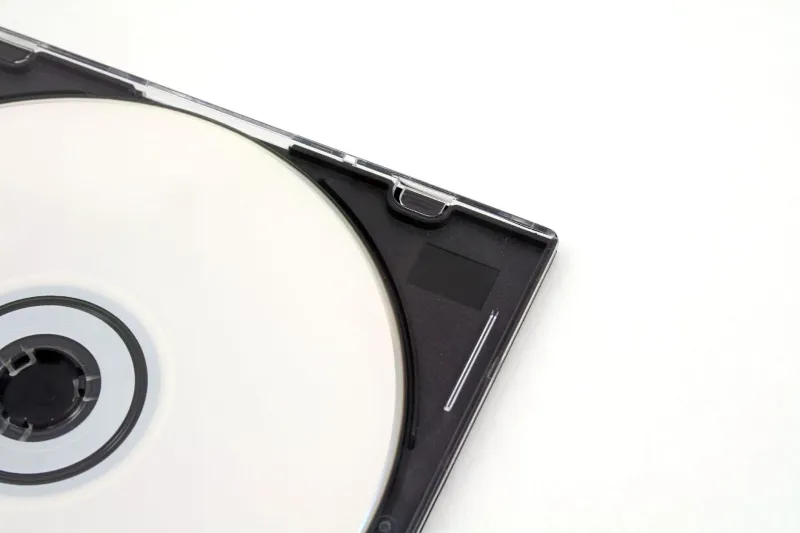
There's a certain kind of person right now who owns a USB-powered CD burner, a stack of blank Memorex discs, and a collection of Sharpies organized by color. They're probably in their early twenties. They almost certainly have a Spotify account they still use. And they are absolutely, deliberately choosing the harder, slower, more intentional option anyway.
The mix CD is having a moment — and not in the nostalgic, ironic way that sometimes passes for a trend. This feels more like a genuine philosophical shift in how a chunk of younger listeners are thinking about music, connection, and what it means to actually share something with another person.
When the Algorithm Can't Love You Back
Streaming killed a lot of things. Liner notes. The album as a complete object. The experience of sitting with a record because you already paid for it and you weren't going to waste the money. But maybe the quietest casualty was the mix — that deeply personal act of sequencing songs for someone else with a specific emotional arc in mind.
Spotify's collaborative playlists are fine. Apple Music's shared libraries exist. But there's no friction there, no cost, no irreversibility. You can add and remove songs endlessly. You can share a playlist with fifty people at once. The whole point of a mix was always that it wasn't scalable — it was made for someone, in a specific moment, with a specific feeling behind it.
That's what a growing number of Gen Z listeners say they're chasing when they dust off the disc burner. Not retro aesthetics for the sake of it. Not content for TikTok, though yes, those videos exist and they do pretty well. Something more like the restoration of stakes.
"When I make someone a CD, I'm committing," says Maya, a 22-year-old music blogger based in Austin. "I can't take it back. I can't edit the tracklist at 2am when I change my mind. It's done. That permanence is kind of the whole point."
The Craft of the Cover
If the tracklist is the heart of a mix CD, the case is its personality. And this is where the format starts to look less like a retro quirk and more like a genuine art practice.
People are going deep on the visual side of things — hand-lettered track listings, collaged inserts made from magazine clippings, watercolor artwork tucked into jewel cases, little notes written in the margins explaining why a particular song had to be track four. The CD itself sometimes gets drawn on. Some people are pressing custom labels. Others are leaving the disc blank and raw because the music is the whole statement.
It's the same instinct that drives zine-making or risograph printing — the idea that a handmade object carries a different kind of energy than something produced at scale. You can feel the decision-making in it. You can feel the time.
For musicians especially, the mix CD has taken on a second life as a DIY distribution format and a curatorial calling card. Independent artists at small shows in cities like Chicago, Portland, and Philadelphia are handing out burned CDs the way people used to hand out business cards — except the CD tells you so much more about who they are.
Curation as Intimacy
Here's the thing that gets lost in conversations about streaming convenience: putting together a tracklist for someone you care about is a form of emotional labor. It requires you to actually think about who they are, what they're going through, what they need to hear right now versus what they love in general. It asks you to make a series of small, defensible choices and stand behind them.
That's not nothing. In a media landscape where personalization has been almost entirely outsourced to recommendation engines, choosing songs for someone by hand starts to feel like a radical act of attention.
DJ and music curator Terrence Webb, who runs a monthly listening event in Brooklyn, sees it as part of a broader reclamation project. "Younger listeners grew up being told what to hear by an algorithm that's really just trying to keep them on the platform longer," he says. "Making a mix — for yourself, for a friend, for whoever — is a way of saying: I have opinions. I made choices. This sequence means something."
That intentionality extends to listening, too. A CD has a fixed running time. It plays in order. You can skip tracks, sure, but there's a mild social contract when someone made it for you — you kind of owe it to them to sit with the thing. That constraint turns out to feel like a feature, not a bug, for people who are exhausted by infinite scroll and endless queues.
The Limits of the Revival
Let's be real about a few things. CD players are not easy to come by. Car manufacturers largely stopped including them years ago, which means a lot of people burning discs right now are doing it for an audience that will have to find a way to actually play them. Portable disc players — the Discman and its descendants — are being hunted down on eBay and Facebook Marketplace with genuine urgency.
And yes, there's a class dimension worth naming. The time and materials required to make a thoughtful mix CD are not nothing. Blank discs, a burner, the physical supplies for decoration — it adds up, even if it's not expensive in absolute terms. The format skews toward people who have leisure time and a certain kind of craft-oriented lifestyle, which is worth acknowledging even as you appreciate what the gesture means.
But these friction points are, for a lot of people, exactly why it matters. The difficulty is the message. Anyone can add a song to a shared playlist. Not everyone will sit down and burn you a disc, draw a little picture on the sleeve, and hand it to you with something like vulnerability.
What It's Actually About
The mix CD revival isn't really about CDs. It's about the hunger for things that feel made, chosen, and meant. It's about the desire to give someone a piece of your taste in a form they can hold. It's about the growing suspicion — especially among younger people who have never known a world without streaming — that convenience optimized everything except the part that made music feel important.
The algorithm knows what you'll probably like. It doesn't know what you need to hear. It can't sit with you in a specific feeling and build a 74-minute arc around it. It can't write "track 7 is for the drive home" in blue Sharpie on the inside cover.
Somebody who loves you can.
That's what's in the jewel case. That's why people are burning discs again.