Smell This: Why Indie Perfume Is the Most Personal Art Form You're Not Taking Seriously Yet
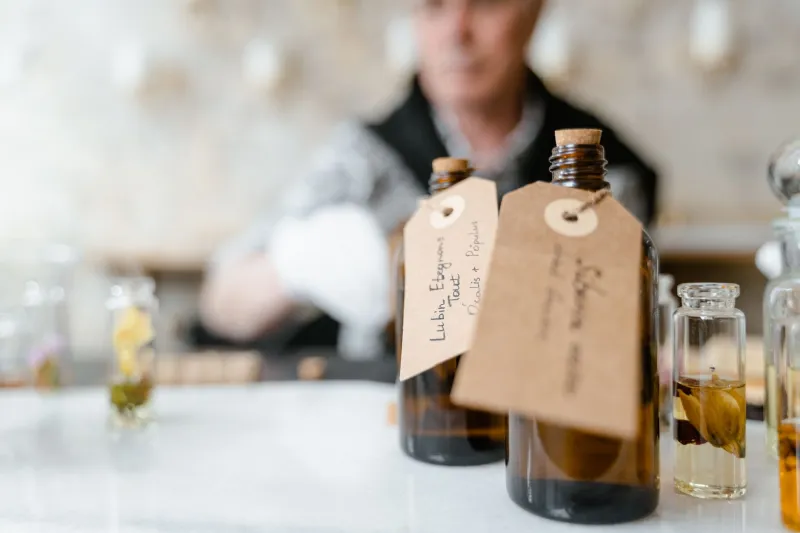
There's a moment that happens to a lot of people when they first walk into a serious indie fragrance studio. You expect it to feel like a Sephora. Clean. Bright. Transactional. Instead, you get low lighting, maybe a shelf of amber apothecary bottles, a person behind a counter who wants to ask you questions before they let you smell anything. Questions like: What does your childhood home smell like? Do you want to feel invisible or noticed? It's disorienting in the best way. And it's exactly why olfactory culture has quietly become one of the most compelling creative spaces in America right now.
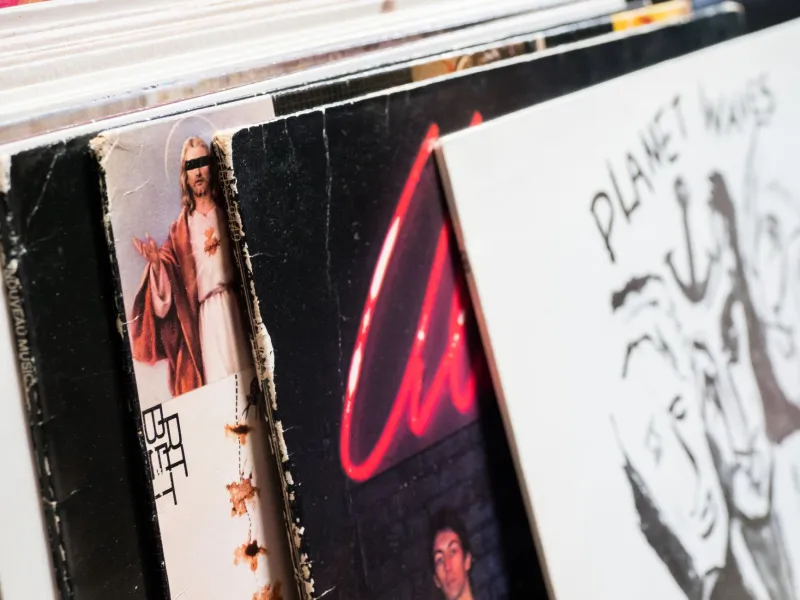
The indie perfume world has been building for years, but something shifted noticeably in the post-pandemic stretch. People who spent two years rethinking everything — where they worked, how they spent money, what actually mattered — came out the other side with a sharper sense of self. And apparently, a sharper sense of smell. Artisanal fragrance houses started selling out limited runs. Waitlists formed. People started talking about their "fragrance wardrobes" the same way they'd talk about a vinyl collection or a curated vintage clothing rotation.
More Than a Scent, Less Than a Product
What separates indie perfumers from the mainstream isn't just the price point or the small-batch production — it's the philosophical commitment to scent as composition. Houses like Imaginary Authors out of Portland, or Black Phoenix Alchemy Lab operating out of the Los Angeles area, don't just sell perfume. They sell narrative. Every fragrance comes with a story, a mood, sometimes an entire fictional world. Imaginary Authors literally names its scents after fake novels. You're not buying a bottle — you're buying a premise.
This is a fundamentally different relationship to product. In the mass fragrance market, you're buying an aspiration that's been engineered by a committee and tested for mass appeal. In the indie space, you're buying someone's obsession. The perfumer — often a single person or a tiny team — made choices that no focus group approved. That specificity is the whole point.
Maya Chen, a Brooklyn-based fragrance collector who started building her collection about four years ago, puts it plainly: "I have maybe forty bottles right now, and I could tell you a story about why I bought every single one. That's not something I can say about my clothes or my furniture. There's something about scent that forces you to be intentional."
Maya talks about her collection the way a serious record collector talks about a particularly rare pressing — with reverence, context, and a clear sense of the emotional geography each piece occupies. She has fragrances for specific seasons, specific moods, specific social situations. "Some of them I've never worn outside my apartment," she admits. "They're just for me."
The Packaging Problem (In the Best Way)
Walk through any indie fragrance brand's website and you'll notice something almost immediately: these people take packaging as seriously as the juice inside. We're talking hand-lettered labels, frosted glass, hand-dipped wax seals, custom-illustrated boxes that look like they belong in a gallery case. Because they kind of do.
Brands like Sweet Tea Apothecary in Savannah, Georgia, or DS & Durga out of Brooklyn have developed visual identities that are as distinctive as any art print. The bottle sitting on your dresser isn't just functional — it's a statement. It says something about your taste, your values, your willingness to seek out the non-obvious choice.
This is where fragrance starts to blur into the broader conversation Arvanon has been having about how everyday objects have become the new fine art. The sneaker. The vinyl record. The handmade zine. The perfume bottle. Each one is a container for something more than its surface function. Each one is a way of saying: I found this. I chose this. This is mine.
Bespoke or Bust
The frontier that's really capturing attention right now is bespoke consultation — the practice of working one-on-one with a perfumer to create a scent that exists for exactly one person. It sounds extravagant, and it can be. But a growing number of indie houses are offering tiered consultation services that make the experience more accessible than you'd think, ranging from a guided selection session to a fully custom formulation.
Studio Olfactory in New York City, for example, offers what they call a "scent portrait" session — a two-hour conversation and smell exploration that results in a custom fragrance built around your specific olfactory memory and aesthetic preferences. The perfumer asks about textures you're drawn to, music you listen to, places you feel most like yourself. The scent that comes out of that process is, by definition, unrepeatable.
For people who've grown exhausted by the endless churn of the beauty industry — the seasonal launches, the influencer collabs, the limited editions that are never actually limited — this kind of radical specificity feels like relief. You're not chasing something. You're arriving somewhere.
Why Now, Why This
It would be easy to frame indie perfume as just another luxury niche for people with disposable income and a lot of opinions. But that reading misses something important. The people most deeply invested in this space aren't always wealthy. They're often people who have made deliberate trade-offs — fewer things, but more intentional things. A $90 indie perfume instead of ten $9 body sprays. Quality of experience over quantity of stuff.
There's also a cultural component that's hard to ignore. In an era when so much of how we present ourselves online has become performative and image-based, scent is genuinely private. Nobody can see what you're wearing. Nobody can screenshot it. A fragrance wardrobe is one of the few remaining forms of self-expression that exists entirely outside the visual economy of social media. That's not nothing. In fact, for a lot of people, that's everything.
The indie perfume world is, at its core, a rejection of the idea that taste is something that gets handed to you. It's a commitment to the slow, sensory work of figuring out who you actually are — one carefully chosen, deeply specific smell at a time.
And honestly? It's one of the most interesting art movements happening in America right now. It just doesn't hang on walls.