Deadstock Dreams: Why Sneakerheads Are the Art Collectors Nobody Saw Coming
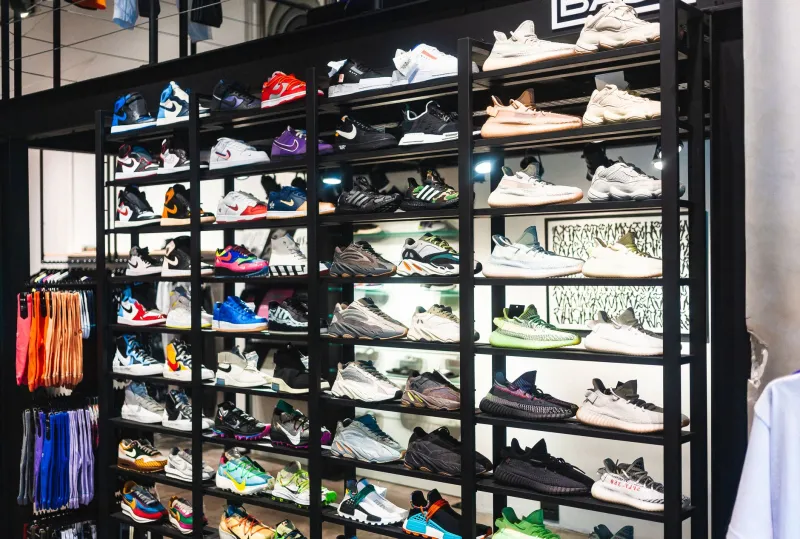
There's a particular kind of silence that falls over a room when someone pulls a pair of vintage Air Jordans out of their original box. It's the same silence you get at a gallery opening when someone walks up to a painting they've only ever seen in a catalog. Recognition, reverence, a little bit of envy. The shoe is pristine. The box is yellowed at the corners. And the person holding it is not a fashion person — they're a collector, whether they'd use that word or not.
Sneaker culture has been building toward this moment for decades, but somewhere between the rise of StockX and the era of $10,000 resale listings, it crossed a line it can't uncross. This isn't about hype anymore. It's about preservation, provenance, and the very human need to assign meaning to objects that move us.
The Drop Is the Event
If you want to understand sneaker collecting, start with the drop. Limited-edition releases from Nike, Jordan Brand, New Balance, or any of the boutique collabs that cycle through the culture every few weeks aren't just product launches — they're choreographed cultural moments. The scarcity is intentional. The anticipation is manufactured. And yet, none of that makes the experience feel less real to the people living it.
When Travis Scott drops another Nike collab or Salehe Bembury puts his fingerprints on a Crocs silhouette, the community response mirrors what happens around a limited art print or a gallery edition. People study the design language. They debate the references. They argue about whether the colorway is inspired or derivative. These aren't casual consumers — they're critics with skin in the game.
The psychology of the limited drop taps into something primal: the idea that access equals taste. Getting a pair isn't just about owning the shoe. It's proof that you were paying attention, that you understood the context, that you moved fast enough. That's not so different from being the person who knew about an artist before the retrospective.
StockX Is the Auction House You Actually Use
Platforms like StockX, GOAT, and Grailed have done something genuinely remarkable: they've built a secondary market infrastructure that rivals the legitimacy of traditional auction houses, but with a user base that skews young, diverse, and decidedly not interested in Sotheby's.
StockX in particular operates with the transparency of a stock exchange — real-time pricing, historical sales data, market trends. You can watch the value of a specific colorway fluctuate based on a celebrity sighting or a restock rumor. That's not retail behavior. That's collecting behavior, with all the speculation and emotional investment that implies.
Authentication is where the parallel to fine art becomes almost uncomfortably direct. Both StockX and GOAT have entire verification systems dedicated to confirming that a shoe is what it claims to be. Counterfeit sneakers are a massive industry — sophisticated enough that even experienced collectors get fooled. The community has developed its own connoisseurship: stitching patterns, box fonts, the specific texture of a midsole, the weight of a lace tag. This is the same close-looking that art historians apply to brushwork and provenance documents. The object demands that level of attention because the stakes are real.
Taste as Currency
Here's what separates a sneaker collector from someone who just owns a lot of shoes: curation. The serious collectors aren't buying everything. They're building something — a collection with a point of view, a through-line, a story about who they are and what they care about.
Some people focus exclusively on original Nike Air Max silhouettes from the late '80s and early '90s, treating them as industrial design artifacts from a specific moment in American visual culture. Others chase collaboration pieces that represent genuine creative partnerships — the Sacai x Nike LDWaffle, for instance, isn't interesting because it's rare. It's interesting because it does something structurally unusual with a classic form, and the designer behind it has a coherent aesthetic that the shoe extends.
That's taste-making. That's the same conversation happening in contemporary art circles, just in a different language.
Grailed, which leans more toward the fashion end of the spectrum, is particularly interesting as a cultural barometer. The pieces that hold value there — the archive Raf Simons, the early Supreme, the obscure Japanese streetwear — tell you exactly what a generation of style-conscious Americans think is worth preserving. It's a living archive of taste, updated in real time.
The Museum Is Already Happening
The institutional world has started to catch up. The Brooklyn Museum, the Museum of Arts and Design, and various pop-up exhibitions have brought sneakers into gallery contexts without a hint of irony. Because there's nothing ironic about it. A Nike Air Max 1 designed by Tinker Hatfield is a legitimate piece of late-20th-century American design, full stop. The fact that it was made to be worn on feet doesn't diminish its cultural weight — it amplifies it.
What's fascinating is that sneaker collectors largely don't need the museum's validation. The culture has been self-sustaining and self-legitimizing for years. The community decides what matters. The market reflects those decisions. The history gets documented in forums, YouTube channels, and Instagram archives maintained by people who care more about this stuff than any institution does.
That's actually a more democratic version of how cultural value gets assigned than the fine art world has ever managed.
You Might Already Be a Collector
If you've ever passed on a pair because the colorway felt wrong for the era, you're thinking like a collector. If you've ever kept a shoe in the box because wearing it felt like a betrayal of what it represents, you're thinking like a collector. If you've ever explained to someone why a particular collaboration matters and watched their eyes glaze over while yours stayed completely lit up — yeah, you're a collector.
The sneaker resale market is a multi-billion dollar ecosystem built on the premise that some objects carry more meaning than their function suggests. That's the entire premise of collecting, whether the objects are Basquiat paintings or deadstock Air Force 1s from 2003.
The difference is mostly who's in the room. And honestly, the sneaker room is a lot more interesting right now.