Cut, Paste, Remember: Why Gen Z Is Ditching the Cloud and Archiving Their Lives the Old Way
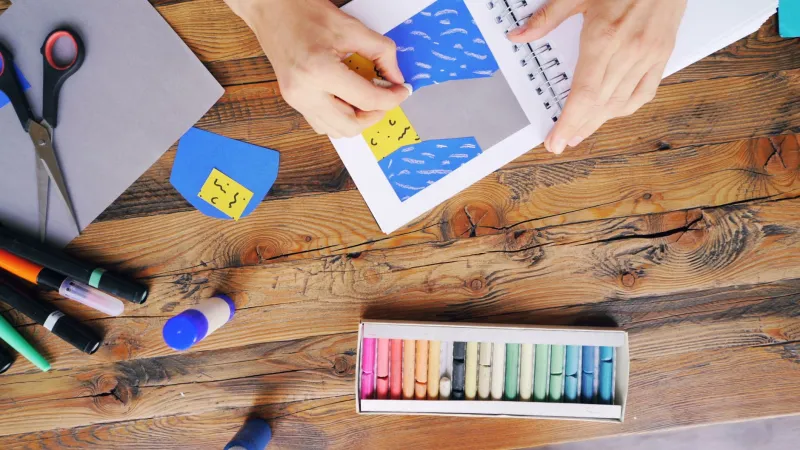
Somewhere in a Brooklyn apartment, Mara keeps a box under her bed. Inside: ticket stubs from concerts she almost didn't go to, a dried flower from a first date that didn't work out, a printed photo of her best friend laughing at something Mara can't even remember anymore. These aren't random scraps. They're pages-in-waiting for her seventh scrapbook — a handmade archive of her own life that no algorithm will ever curate for her.
"My phone has like 14,000 photos on it," she says, laughing a little at the absurdity. "But I can't tell you what most of them are. My scrapbook? I can tell you every single page."
This is the thing about analog scrapbooking that its practitioners keep coming back to: intentionality. In a world where memory storage is essentially infinite and effortless, the deliberate friction of physical archiving has become its own kind of value.
The Problem With Infinite Memory
Here's the paradox of the digital age — we've never been better at capturing moments, and we've never felt further from actually having them. Google Photos will remind you of something you did three years ago with a cheerful notification. Instagram will surface a memory you half-forgot. But none of that curation is yours. It's algorithmic. It's optimized. It's chosen by a system that doesn't know the difference between a photo that changed your life and one you took of your lunch.
The cloud doesn't know what matters. You do.
That gap — between what gets saved and what actually means something — is exactly where the analog scrapbook has found its footing with a generation that grew up digital but is increasingly skeptical of what digital actually delivers.
Sales of physical photo printing services have quietly climbed over the last few years. Craft stores across the country report that scrapbooking supplies, once the domain of suburban mom meetups and holiday crafting, have become a consistent draw for a younger demographic. On TikTok and Instagram, scrapbook accounts pull hundreds of thousands of followers, with creators showing the slow, meditative process of trimming, layering, and annotating pages by hand.
More Than Memory-Keeping — It's a Creative Practice
Ask anyone who does this seriously and they'll push back on the word "scrapbooking" pretty fast. For a lot of them, what they're making is closer to a visual diary, a collage series, or an artist's book than anything your grandmother kept in a binder.
Jordan, a 24-year-old graphic design student in Chicago, works in a style he describes as "archival chaos" — overlapping ephemera, handwritten annotations, printed DMs, dried leaves, and fragments of magazine text that mirror the emotional register of whatever period of his life he's documenting. "Each book is basically a self-portrait," he says. "The design choices tell you as much about where I was mentally as the actual photos do."
That's the element that purely digital archives can't replicate: the physical decision-making embedded in the object itself. Which photo gets printed? How big? What goes next to it? What do you write in the margin, and in what pen, and how messy is your handwriting on that particular day? Every choice is a data point. Every page is a composition.
For many creators in this space, the scrapbook functions less as a memory container and more as a creative medium — one that happens to be autobiographical.
The Artifacts Are the Point
There's a whole subculture built around the physical stuff that goes into these books. Concert wristbands. Polaroids. Receipts from meaningful meals. Pressed botanicals. Stickers. Handwritten notes. Postcards. Fortune cookie slips. The analog scrapbook is, at its core, a collection — and collectors know that the object itself carries information that a digital scan can never fully hold.
Nadia, who runs a small scrapbooking community out of Austin, puts it plainly: "A receipt from the night everything changed is not the same as a photo of that night. It's proof that you were there. That it happened. There's something about a physical artifact that a JPEG just doesn't give you."
That materiality is part of why people in this community often describe their finished books as irreplaceable in a way that digital files — theoretically more permanent, theoretically safer — simply aren't. If your hard drive dies, you restore from backup. If your scrapbook burns, it's gone. And somehow, that vulnerability makes it matter more.
Resistance by Another Name
It would be easy to frame all of this as pure nostalgia — Gen Z romanticizing an analog past they never actually lived through. But that reading misses the point. These aren't people who wish it was 1994. They're people who understand the digital landscape intimately and are making a conscious choice to operate outside of it for something they consider important.
The scrapbook is a refusal. A refusal to let the cloud own your memories. A refusal to let the algorithm decide what's worth surfacing. A refusal to accept that the most efficient format is automatically the most meaningful one.
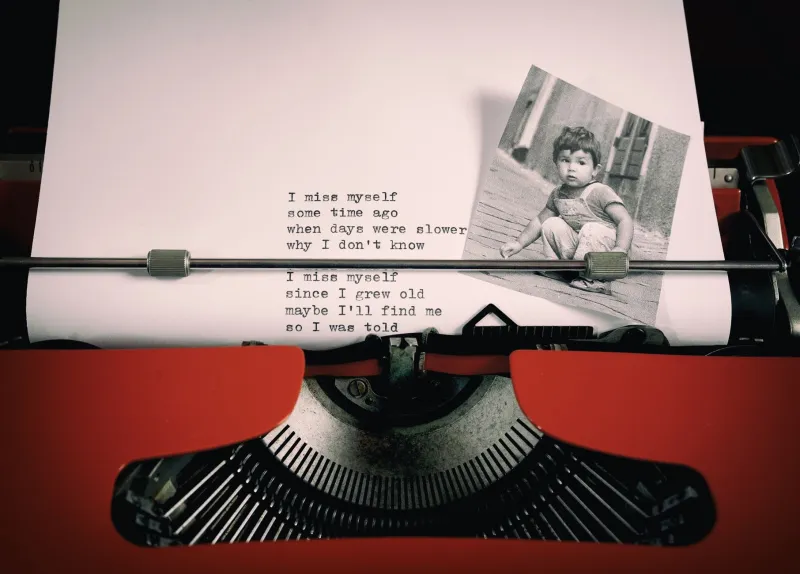
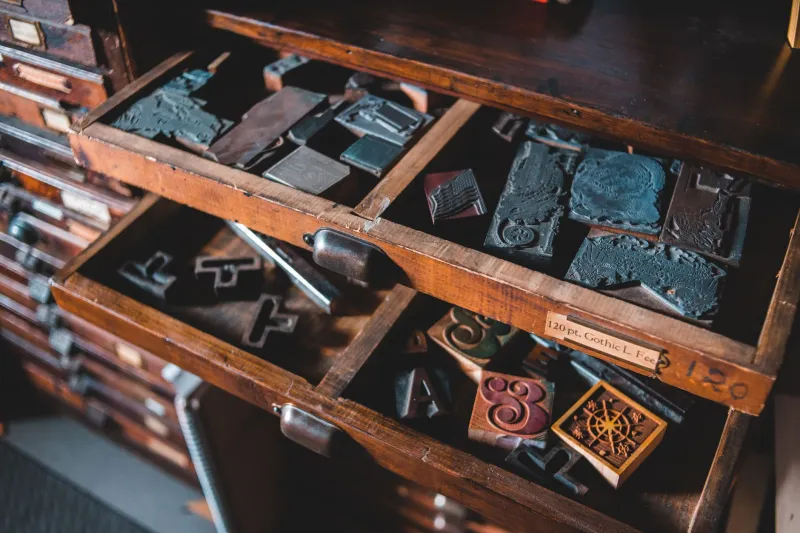
In that sense, it fits neatly into a broader pattern — the same impulse driving vinyl sales, film photography, letterpress printing, and handwritten letters. Not anti-technology, exactly. More like pro-texture. Pro-friction. Pro-the-thing-that-requires-something-from-you.
What You Make When You Make One
Here's what nobody tells you about keeping a physical archive of your life: it changes how you experience the things you're archiving. When you know you might print a photo, you think differently about taking it. When you save a ticket stub, you're already deciding that this night is worth remembering. The practice shapes the living, not just the recording.
Mara says she's become more selective about what she does and where she goes, partly because she thinks about what will and won't make it into the book. "It sounds weird, but it makes me more present," she says. "Like, I'm actually asking myself: is this worth keeping?"
That question — is this worth keeping? — might be the most countercultural thing a young person can ask right now. In a culture that defaults to saving everything, choosing what deserves permanence is a radical act.
The box under the bed is waiting. The scissors are on the desk. The photos are printing.
Some things are worth the effort of holding in your hands.