Side A, Side B, All Heart: The People Bringing Back the Mixtape as a Love Language
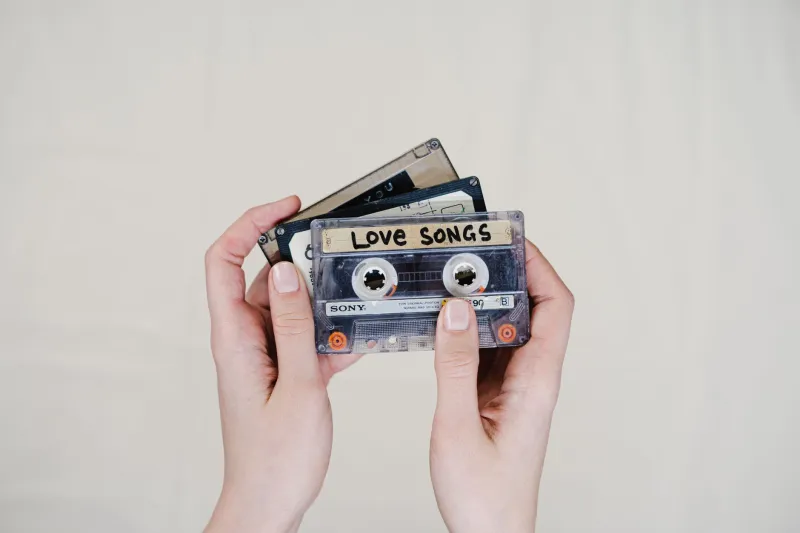
There's a cassette tape sitting on Marisol Vega's kitchen table in Austin, Texas. The label is hand-lettered in silver marker. The track listing — written in the booklet folded inside — runs sixteen songs deep, each one chosen with the kind of deliberation most people reserve for wedding vows. She made it for her best friend's birthday. It took her three weeks.
"I kept second-guessing the order," she says, laughing. "Like, does 'Palo Santo' by Years & Years belong on side A or do I save it for the emotional gut-punch at the end of side B? These are actual decisions I lost sleep over."
This is the mixtape revival in its purest form — not retro cosplay, not nostalgia bait, but a genuine reckoning with what it means to share music with someone when every song on earth is already one tap away.
The Algorithm Gave Us Everything and Nothing
Streaming killed the mix. Or at least, that was the assumption. When Spotify Wrapped became a cultural event and "Discover Weekly" started feeling eerily personal, the idea of curating music by hand seemed quaint — maybe even wasteful. Why spend an afternoon with a cassette deck and a stack of CDs when a playlist app can generate something pretty decent in seconds?
But that efficiency, it turns out, is exactly the problem.
"There's no weight to it," says Jordan Park, a 28-year-old graphic designer in Brooklyn who started making cassette mixes during the pandemic and hasn't stopped. "When someone shares a Spotify playlist with you, it's like... okay, cool. But when someone hands you a tape they made, you know they sat with it. You know they thought about you specifically."
That specificity — the human fingerprint on a sequence of songs — is what the revival is really about. It's less about the medium and more about the message embedded in the labor.
The Formats Are Multiplying
Cassette tapes are the obvious entry point, and their resurgence isn't just anecdotal. Blank tape sales have climbed steadily since 2020, and small-batch cassette manufacturers like National Audio Company in Springfield, Missouri, have reported sustained demand from a younger demographic. But the mixtape revival isn't limited to tape.
Some creators are pressing vinyl compilations through services like Qrates, pooling tracks from friends' collections into limited-run records that double as art objects. Others are going full archival with CD booklets — handwritten, illustrated, sometimes including pressed flowers or polaroids — treating the jewel case as a canvas.
Cleo Hartmann, a 24-year-old art student in Portland, makes what she calls "sound zines": CD-Rs paired with hand-folded booklets that include not just track listings but annotations, personal essays about each song, and hand-drawn portraits of the artists. She sells them at local zine fests and gives them to people she loves.
"It's the closest thing I have to writing someone a letter," she says. "Except the letter is also music."
Curation as Craft
What's striking about the people deep in this world is how seriously they take the editorial process. There are unspoken rules — the kind that don't exist in algorithm-land. A good side A opener sets tone without overwhelming. You don't put two songs in the same key back to back if you can help it. Emotional peaks need valleys. The last track on a side is almost as important as the first.
These aren't arbitrary constraints. They're inherited from a lineage of mix-makers that runs from the boom box era through the CD-R golden age of the early 2000s, and they force a kind of intentionality that streaming discourages by design.
"Infinite scroll is the enemy of curation," says Marcus Webb, who runs a small newsletter called Tape Deck Confessional out of Chicago. "When you have a 45-minute side and that's your canvas, you have to make choices. You have to kill your darlings. That constraint is where the art lives."
Marcus started the newsletter as a place to write about the mixes he was making and receiving. It now has over 3,000 subscribers, many of whom send him scans of their own handwritten liner notes.
Giving a Mix Is a Vulnerable Act
Ask anyone who's made a mixtape for someone they care about and they'll tell you: it's terrifying. You're essentially handing over a document of your inner life and hoping the recipient speaks the same emotional language.
That vulnerability is part of the point. In an era when self-presentation is endlessly optimizable — curated feeds, filtered photos, carefully worded bios — there's something almost radical about giving someone a piece of media that reveals exactly what moves you, in what order, and why.
"I made a tape for someone I was dating and it basically said everything I couldn't say out loud," Marisol admits. "The songs did the work. And when they listened to it and came back with specific things they noticed — like, 'I see why you put that track there' — that felt like being truly known by another person."
That's a feeling no algorithm has figured out how to replicate. And maybe that's the whole point.
Where to Start If You're Curious
The barrier to entry is lower than you'd think. Blank cassettes are available on Amazon and at most indie record stores. A decent dual-deck cassette recorder — the kind that lets you record from one tape to another, or from a digital source — can be found at thrift stores or on eBay for under $40. Blank CD-Rs are practically free.
The harder part is the sitting-with-it. The listening, the sequencing, the handwriting. That part takes time. And that, everyone in this community will tell you, is entirely the point.
The mixtape was never really about the tape. It was always about the willingness to slow down and say: I thought about you, specifically, when I heard this. In 2025, that might be the most countercultural gesture available to us.