Scent as Self: Inside the Obsessive World of Indie Perfume Collecting
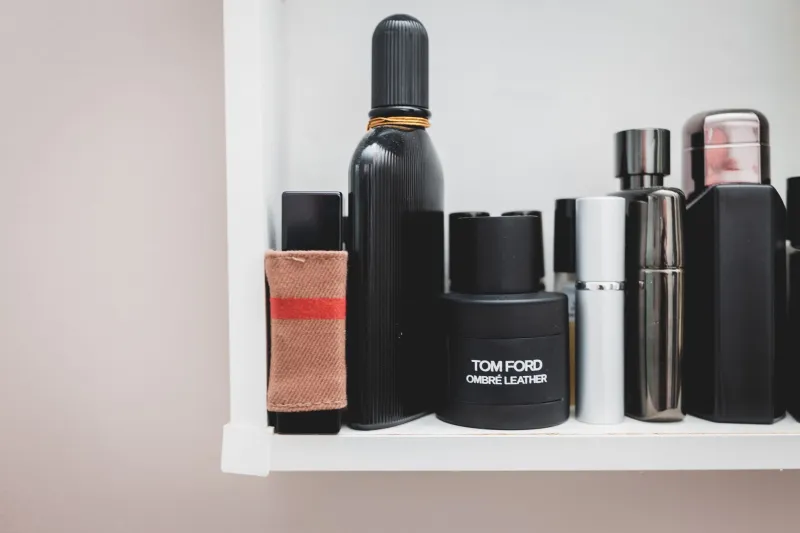
There's a shelf in a Brooklyn apartment that looks, at first glance, like a small altar. Amber bottles of varying heights, hand-labeled in minimal typography. A few with hand-painted caps. One wrapped in what appears to be wax paper stamped with an abstract woodblock print. The person who curated this collection can tell you exactly when and why they purchased each one, what memory or mood it unlocks, and which artist or perfumer collaborated on the packaging. This is not a bathroom shelf. This is a collection.
Fragrance has entered its art era — and it's not going back.
The Niche Perfume Renaissance Nobody Saw Coming
For decades, the perfume industry was synonymous with celebrity endorsements, department store counters, and mass-market appeal. You wore Chanel No. 5 because it was timeless. You wore whatever your favorite pop star launched because it was fun. The idea that fragrance could function as genuine artistic expression — something with a point of view, a conceptual framework, a collaborator list — felt reserved for a tiny sliver of the ultra-wealthy.
Then something shifted.
Over the last decade, and accelerating sharply post-pandemic, a wave of independent perfumers started treating scent composition the way experimental musicians treat sound — as a medium for ideas, not just pleasure. Brands like Imaginary Authors out of Portland, Exaltation based in Los Angeles, and New York-based DS & Durga began building entire narrative universes around their fragrances. Each scent came with a story, an aesthetic world, sometimes even a visual artist attached to its creation. The bottle wasn't just packaging. It was part of the work.
The fragrance community noticed. Then Gen Z absolutely ran with it.
Why Gen Z Is Buying Perfume Like It's Vinyl
There's a useful parallel here to how younger generations adopted records. Vinyl wasn't just about the music — it was about the ritual, the physicality, the statement of taste. Owning a record collection said something about you. It was curatorial. It was identity work.
Fragrance is filling that same role right now, and the numbers back it up. The global niche perfume market has been growing at roughly double the rate of mainstream fragrance for years, and a disproportionate chunk of that growth is being driven by younger consumers in the US who are willing to spend $150 to $400 on a single bottle from a brand most of their coworkers have never heard of.
Platforms like TikTok and Reddit's r/fragrance community — which has ballooned to over a million members — have created the kind of obsessive collector culture that used to exist only around sneakers or vintage clothing. Fragrance influencers on TikTok, sometimes called "fragnatics," rack up millions of views breaking down scent pyramids, comparing reformulations, and debating which indie house is doing the most interesting conceptual work. It's deeply nerdy and completely sincere, which is exactly the energy that tends to drive genuine cultural movements.
The appeal isn't just aesthetic. It's also about access to something that feels genuinely underground. When you wear a fragrance from a small-batch perfumer in New Mexico who sources ingredients directly from botanical farms and collaborates with a ceramicist on the bottle design, you're wearing something that tells a story most people around you won't know. That's a very specific kind of cultural currency, and Gen Z has figured out how to spend it.
Boutique Perfumers and the Art Collaboration Model
What makes the indie fragrance world particularly interesting from a cultural standpoint is how deliberately it has blurred the line between product and art object. Collaboration is central to the whole thing.
Perfumers are increasingly partnering with visual artists, graphic designers, textile makers, and even architects to create what amounts to a total aesthetic experience. The scent is one layer. The bottle is another. The outer packaging, the tissue paper inside the box, the card that explains the inspiration — all of it is considered. Some releases function almost like limited-edition art prints, numbered and signed, with resale markets that mirror what you'd find on secondary art platforms.
Los Angeles-based brand Hendley & Co. has released fragrances inspired by specific neighborhoods and moments in American urban history, with packaging designed by independent illustrators who interpret each narrative visually. Zoologist Perfumes, beloved by the US collector community despite its Canadian origins, creates entire illustrated worlds around each scent — their Bat fragrance famously came with artwork so detailed and specific that collectors were framing the boxes.
This is not accidental. It's a philosophy. The perfumers behind these projects talk openly about wanting their work to be experienced the way you experience a piece of music or a painting — as something that rewards attention, that reveals itself over time, that means different things in different contexts.
The Collector Community Is Its Own Scene
One thing that separates serious fragrance collecting from casual perfume wearing is the community infrastructure that has built up around it. Decant culture — where collectors purchase small sample quantities of high-end fragrances to try before committing to a full bottle — has spawned an entire cottage industry of decanting services, swap communities, and online marketplaces. Sites like Fragrantica function as social networks and encyclopedias simultaneously, with hundreds of thousands of user reviews creating a kind of crowd-sourced critical canon.
In-person fragrance events are popping up in cities like New York, LA, Chicago, and Austin — intimate gatherings where collectors bring their rarest bottles to share, where perfumers show up to talk about their process, where the conversation sits somewhere between a gallery opening and a record swap meet. The vibe is unmistakably arts-adjacent. People are dressed intentionally. The lighting is considered. Someone is almost certainly wearing something you've never smelled before and can't stop thinking about.
There's also a growing critical vocabulary developing around fragrance that mirrors how people talk about art or music. Concepts like "linearity" versus "evolution on skin," discussions of a perfumer's "house aesthetic" across multiple releases, arguments about whether a reformulation constitutes a betrayal of the original work — this is the language of connoisseurship, applied to something you wear.
Smell Is the Most Personal Medium
What makes fragrance such a compelling art form, and maybe why it's having this particular cultural moment, is how fundamentally intimate it is. You don't look at it. You don't listen to it. It enters you, and it attaches itself to memory and emotion in ways that visual art and music simply can't replicate neurologically. Scent is processed directly by the limbic system — the brain's emotional core. There's no intellectual buffer.
That intimacy is exactly what the best indie perfumers are working with. When a fragrance is designed to evoke a specific place, time, or emotional state — not just to smell pleasant — it becomes something you carry inside you, not just on you.
For a generation that grew up with everything digitized and dematerialized, there's something genuinely radical about an art form that is completely, irreducibly physical. You cannot stream a fragrance. You cannot screenshot it. You have to be present with it, in your body, in real time.
Maybe that's the whole point.