No Gallery Required: The Collective Movement Rewriting How Art Gets Made and Seen
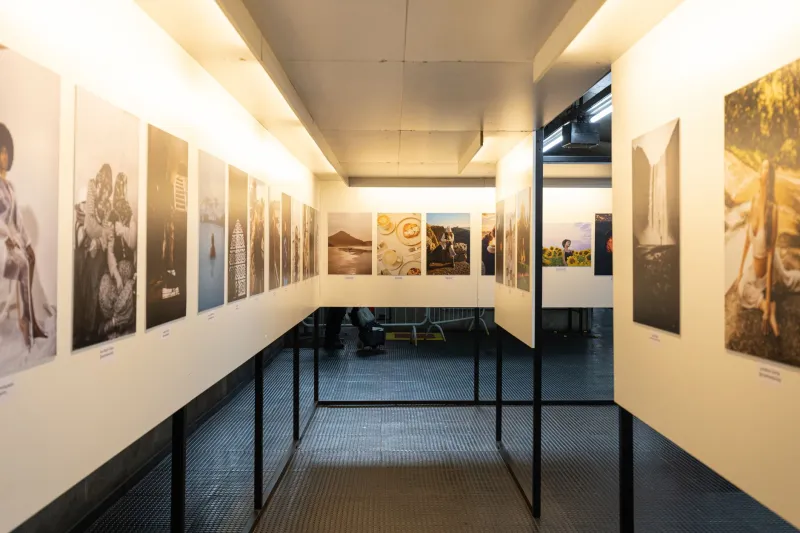
There's a loading dock in East Detroit that doubles as a gallery every first Friday of the month. No velvet rope. No $18 glasses of natural wine with a tasting note nobody asked for. Just art on raw walls, a cooler of cheap beer, and a crowd that actually wants to be there. The people who made the work are standing right next to it, talking to anyone who walks through the door.
This is not an anomaly. It's a movement.
All over the US — in repurposed warehouses in South LA, converted storefronts in Philadelphia's Kensington neighborhood, shared studios in Chicago's Pilsen corridor — a generation of artists is quietly dismantling the traditional gallery model and building something that fits them better. It's peer-led, community-funded, and almost aggressively accessible. And it's changing the way we think about who art is actually for.
The Gallery System Was Never Built for This Generation
Let's be honest about what the traditional gallery model actually is. It's a market mechanism dressed up as a cultural institution. Work gets selected based on what's likely to sell to collectors. Artists give up significant commission — often 40 to 50 percent — for the privilege of having their work displayed in a space that most people find intimidating to walk into. The whole ecosystem runs on relationships that take years to build and gatekeeping that can feel deliberately opaque.
For a generation that grew up watching institutions fail them in pretty much every other area of life, opting out of that system isn't cynicism. It's just logic.
"The gallery was never going to be interested in what I was making, and I stopped pretending it should be," says Marcus Osei, a 26-year-old painter and founding member of BLOC/K, a collective operating out of a shared studio space in Atlanta's West End. "We didn't wait for permission. We just started showing work."
BLOC/K is one of dozens of collectives that have emerged in the last four years, accelerating sharply after the pandemic reshaped how artists thought about space, community, and sustainability. They pool resources for rent and materials. They rotate curatorial duties. They set their own prices — or sometimes don't charge at all, running on donations and merch sales and the occasional grant from a local arts council.
The Economics of Doing It Yourself
The financial math, surprisingly, can work in the collective's favor. When a group of eight artists splits a $3,000 monthly studio rent in a secondary market city, each person is paying $375 for a workspace and an exhibition venue. Compare that to the economics of pursuing a traditional gallery relationship, where the artist typically covers their own production costs, handles framing and shipping, and then surrenders nearly half their sale price.
Collectives also tend to lean into revenue streams that galleries ignore entirely. Workshops. Subscription models where local supporters pay a small monthly fee for studio access and early previews of new work. Limited-edition prints sold directly through Instagram. Pop-up markets that draw foot traffic galleries never see. Some collectives are partnering with local restaurants and coffee shops to create semi-permanent rotating exhibitions that pay a flat monthly fee.
In Portland, a collective called Soft Grid has built a small but loyal subscriber base of around 400 people who pay $15 a month for what amounts to a community membership — access to studio events, a quarterly zine, and the satisfaction of knowing they're directly sustaining artists they believe in. "It's basically a CSA but for art," says co-founder Deja Whitmore. "People want to feel connected to where things come from."
What These Spaces Actually Feel Like
Walk into most traditional galleries and you know immediately that the space is not designed for you to feel comfortable unless you're already the kind of person who belongs there. The lighting is calibrated. The silence is enforced. The price lists are tucked away in a way that makes asking for them feel gauche.
Collective spaces feel different in ways that are hard to articulate but immediately obvious. The work tends to be in conversation with itself — artists showing together because they're genuinely in dialogue, not because a dealer curated a thematic grouping for a catalog. There's usually music. People are eating snacks. The artist whose painting you've been staring at for ten minutes is probably the one who just handed you a flyer.
In Brooklyn's Bushwick neighborhood, which has long been a hub for artist-run spaces, newer collectives are intentionally pushing further — into neighborhoods where rent is lower and the communities are less likely to be priced out by the art world attention that tends to follow. It's a conscious effort to avoid the exact gentrification cycle that hollowed out the original Bushwick scene.
"We talk about this constantly," says Yara Mendez, who co-runs a collective called Tierra Común in the South Bronx. "We're from here. We're not bringing art to a neighborhood. We're making art inside a community we're actually part of."
The Future of Discovery
One of the most interesting ripple effects of the collective movement is what it's doing to art discovery. The traditional model relied on critics, dealers, and art fair circuits to surface new work. That pipeline is slow, expensive to access, and deeply homogenous in who it tends to elevate.
Collectives are building their own discovery networks. Instagram still plays a role, but so do word-of-mouth between cities, collaborative zines, shared newsletters, and cross-collective events where groups from different cities take over a space together for a weekend. There's a whole underground circuit developing that operates almost entirely outside the institutional art world's awareness.
Whether that's sustainable long-term is an open question. Some artists will eventually want the kind of market validation that only the gallery system can provide. Collectives sometimes dissolve when members' ambitions diverge. The economics, while workable, are still fragile.
But something real is being built here. A different set of values about what art is worth, who gets to make it, and what it means to show up for a community rather than a market. That's not nothing. That's actually everything.
The loading dock in East Detroit will be open again next Friday. You should go.