Sequence Is Everything: How Gen Z Turned the Spotify Playlist Into a Serious Art Form
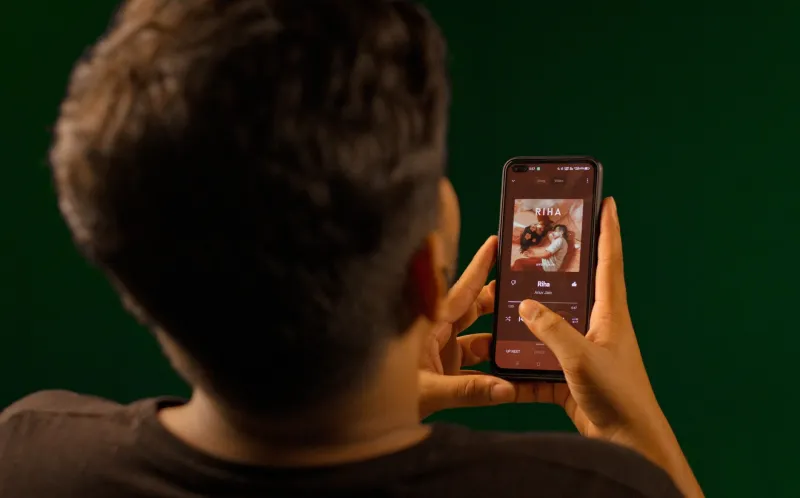
There's a playlist that Marisol, a 24-year-old graphic designer from Portland, has been building for almost eight months. It doesn't have a clever title yet — she says she'll know it when she hears it. What it does have is a 47-track running order she's revised at least thirty times, a color-coded spreadsheet tracking the emotional trajectory of each song, and a handwritten note tucked inside her sketchbook describing the exact mood she wants listeners to feel at the halfway point.
"It's not a vibe," she says flatly. "It's a narrative."
This is not a niche behavior. Across TikTok, Reddit threads, and Discord servers dedicated to music obsessives, a quiet but unmistakable movement is taking shape. For a specific strain of Gen Z listener, the playlist has graduated from casual background noise into something much more deliberate — a curated statement, a personal archive, sometimes even a love letter.
The Death of Shuffle
Ask any serious playlist builder and they'll tell you the same thing: shuffle is the enemy. The whole point is the sequence.
Track ordering — the kind of obsessive attention to flow that used to be the exclusive domain of album producers and mixtape auteurs — has become a defining concern for a generation that grew up with infinite choice and is actively pushing back against it. When everything is available all the time, the act of arranging becomes radical.
Jordan, 22, a music blogger based in Austin, has been building what he calls "arc playlists" since high school. Each one tells a story. Not lyrically, necessarily, but emotionally — a journey with a beginning, a tension point, and a resolution. "I think about it like a film score," he explains. "You're not just picking songs you like. You're building a world someone else is going to walk through."
He spends anywhere from two weeks to two months on a single playlist before sharing it. He tests transitions obsessively, sometimes swapping two adjacent tracks a dozen times to find the right emotional handoff between them. When he finally publishes, he includes a written note — part liner, part artist statement — explaining the intent.
"People message me to say they cried at track 19," he says. "That's not an accident. That's craft."
Algorithmic Resistance, One Song at a Time
There's something worth paying attention to in the timing of all this. The rise of deeply intentional playlist curation is happening at exactly the moment streaming algorithms have gotten most aggressive. Spotify's AI DJ, auto-generated mixes, and radio features are designed to keep you listening without ever having to think. The playlist-as-art movement is, in part, a direct refusal of that offer.
It mirrors something Arvanon has tracked across analog culture — the resurgence of film photography, letterpress printing, handwritten zines. In each case, the appeal isn't nostalgia exactly. It's resistance to frictionlessness. It's the insistence that making something take effort is how you make it mean something.
Digital curation carries that same logic into a streaming-native space. You can't hold a Spotify playlist in your hands, but you can feel the difference between one that was assembled with intention and one that was auto-generated in thirty seconds. Listeners know. They can tell.
Naomi, 26, a visual artist from Brooklyn who curates playlists under the handle @softtransitions, puts it plainly: "Algorithms optimize for engagement. I'm optimizing for feeling. Those are completely different goals."
Liner Notes Are Back (They Never Left)
One of the most interesting flourishes in this subculture is the return of the liner note. Playlist descriptions on Spotify are technically limited and often ignored — but that hasn't stopped dedicated curators from writing them anyway, sometimes migrating the full text to a linked blog post, a Notion page, or even a physical card they photograph and pin to the playlist cover.
The content ranges from brief and poetic ("for driving home after a conversation that changed something") to genuinely essayistic — multi-paragraph explorations of why a particular sequence of songs captures a specific emotional state that the curator couldn't articulate any other way.
It's museum wall text for a digital medium, and it's deeply sincere in a way that internet culture doesn't always make room for.
"I think people are hungry for context," says Marisol. "We've been trained to just consume and move on. Writing about why a playlist matters forces you to actually understand what you were going for. It makes you a more intentional person."
Collaborative Playlists as Intimacy
If solo curation is an art form, collaborative playlists are something closer to a relationship.
Shared Spotify playlists — where two or more people contribute tracks, sometimes in real time — have become a surprisingly meaningful form of connection for Gen Z. Couples build them together as ongoing soundtracks to their relationships. Friend groups use them to stay emotionally in sync across distance. Some people describe sharing a collaborative playlist with someone new as more vulnerable than texting them.
The reason isn't hard to understand. Music taste is deeply personal. Choosing what to add to a shared space — and watching what the other person puts in — is a form of disclosure. It's saying: this is what I'm made of, this is what I want you to know about me.
Jordan has a collaborative playlist he's been building with his best friend since 2020. They've never explicitly discussed what it's about. "We don't have to," he says. "The playlist says it."
Curation as Identity
What ties all of this together — the obsessive track ordering, the liner notes, the collaborative intimacy — is the idea that curation is a form of self-expression as legitimate as making something from scratch. You don't have to write the songs. You have to hear them correctly, sequence them honestly, and share them with enough context that someone else can feel what you felt.
That's not a small thing. In a culture saturated with content and starved for meaning, the ability to curate with intention — to say this matters, and here's why, and here's the exact order in which you should encounter it — is a genuinely valuable skill.
And it's one that Gen Z, raised on infinite scroll and trained to distrust algorithmic taste-making, seems to be developing with real seriousness.
Marisol still hasn't finished her playlist. She thinks she's close. Last week she moved track 31 to track 28 and said it finally felt right — like a sentence that had been grammatically correct but emotionally wrong, suddenly snapping into place.
"When it's done," she says, "I want someone to listen to it start to finish and feel like they read a book."
That's not a playlist. That's a body of work.