Bottled Chapters: How Gen Z Turned Fragrance Into a Living, Breathing Memoir
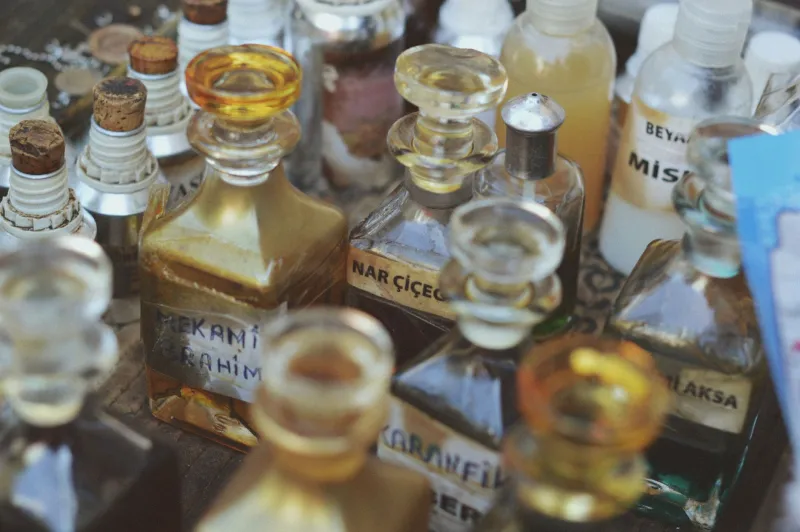
There's a shelf in Maya Okonkwo's Brooklyn apartment that her roommates call "the archive." It holds 34 bottles — some nearly empty, some barely touched, some decanted into tiny glass vials labeled in her handwriting. Maya, 24, doesn't think of herself as a perfume collector in any traditional sense. She thinks of herself as someone who doesn't want to forget.
"Every bottle is basically a timestamp," she says. "The one I wore all through that weird winter I spent freelancing from my parents' house in Ohio. The one I bought the day I got my first real paycheck. I can pick them up and go back."
This isn't a niche quirk. It's a quietly spreading practice — and it's rewriting what fragrance even means for a generation that grew up watching their elders chase the next big designer launch.
The Signature Scent Is Dead. Long Live the Library.
For decades, fragrance culture was built around a single aspirational idea: find your scent, wear it forever, become inseparable from it. Your grandmother's Chanel No. 5. Your mom's Clinique Happy. The concept of a "signature" scent was about projection, about broadcasting a fixed identity to the world.
Gen Z isn't buying it — literally or figuratively.
Instead, young fragrance enthusiasts are building what the community calls "fragrance wardrobes" or, increasingly, fragrance libraries. The logic tracks with how this generation approaches everything from fashion to music: identity isn't fixed, so why should the way you smell be? A library implies breadth, intention, and above all, the idea that different moments call for different stories.
The numbers back this up. Niche and indie fragrance houses — brands like Commodity, DS & Durga, Imaginary Authors, and Dedcool — have seen surging interest among younger buyers over the last three years. Meanwhile, fragrance communities on Reddit (r/fragrance has over 400,000 members), TikTok's #PerfumeTok, and Discord servers dedicated to niche houses are overflowing with people who sound less like beauty consumers and more like record collectors comparing pressings.
Journaling in Sillage
One of the most interesting offshoots of this movement is fragrance journaling — the practice of keeping a written or digital log of every scent you try, wear, or own, complete with notes on the occasion, the emotional context, and how the fragrance evolved on your skin throughout the day.
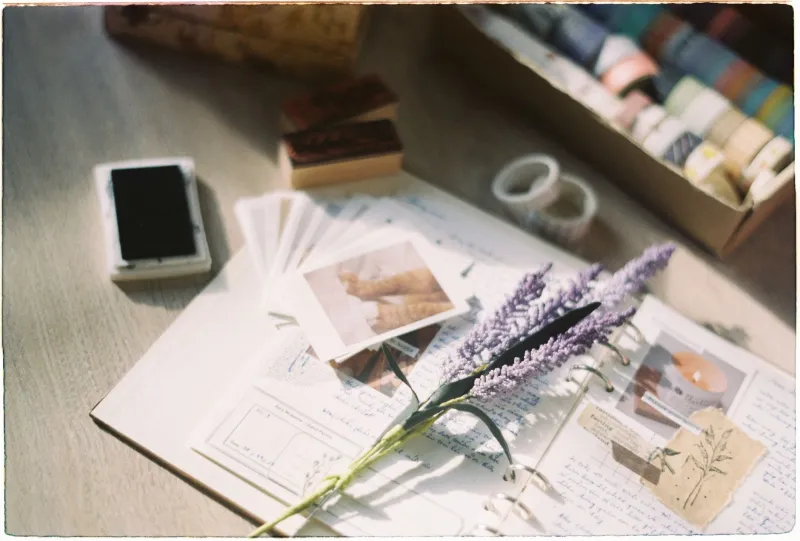
Fragrance journaling apps like Fragrantica and Dossier have become reference tools, but plenty of people are going analog about it: dedicated notebooks, index cards, even bullet journal spreads with hand-drawn bottle illustrations. The ritual mirrors what literary types do with reading journals — tracking not just what you consumed, but what it meant to you at that particular point in your life.
"I started journaling my scents because I kept forgetting which ones I'd tried at department store counters," says Theo Marchand, a 22-year-old in Austin who now runs a small fragrance review account on Instagram. "But it turned into something way more personal. I'll read an old entry and remember exactly where I was, what I was anxious about, what I was hoping for. It's kind of wild how much is stored in a smell."
That's not just poetic — it's neuroscience. The olfactory system is directly wired to the hippocampus and amygdala, the brain regions most responsible for memory and emotion. Scent bypasses the thalamus entirely, which is why a whiff of something can detonate a memory before you've even consciously registered what you're smelling. Gen Z, a generation that has grown up hyperaware of mental health and emotional processing, has found in fragrance a uniquely direct line to their own inner archive.
Niche Is the Point
If fragrance is becoming memoir, then the choice of which fragrance matters enormously — and that's driving a deliberate turn away from mainstream houses toward indie and niche brands.
The appeal isn't just about snobbery or aesthetics, though both play a role. It's about specificity. A mass-market fragrance is designed to appeal to as many people as possible, which means it's engineered to offend no one. A niche fragrance — like the smoky, almost-weird leather of Commodity Moss or the strange green humidity of D.S. & Durga's Freetrapper — makes a statement that not everyone will understand. That's the whole point.
"I want a scent that feels like it belongs to me," says Jess Park, 26, who started building her collection during the pandemic. "If I walk into a party and someone says 'what are you wearing?' and I say a brand they've never heard of, that's not me being snobby. That's me saying this is actually mine. I found it. It's not everywhere."
The decant culture that has exploded on platforms like Etsy and through community swaps on Reddit amplifies this. Decants — small sample quantities of fragrances, often split from full bottles by community members — let people try dozens of niche scents without the financial barrier of a $200 full bottle. It's democratized access to a corner of the market that used to be exclusively for the wealthy, and it's created a gift economy of scent exploration that feels genuinely communal.
Layering as Language
Then there's the practice of layering — wearing two or more fragrances simultaneously to create something entirely new. In mainstream beauty culture, layering is a footnote, a trick. In Gen Z fragrance communities, it's closer to composition. People share their "accords" — combinations they've discovered — with the same enthusiasm a musician might share a chord progression.
The idea that you can combine a woody base from one bottle with a citrus top note from another and arrive at something no perfumer has ever bottled is intoxicating. It turns the wearer into a co-creator. It makes the scent genuinely, unreproducibly theirs.
This is where fragrance starts to rhyme with other creative practices that define this cultural moment — the DIY zine, the curated thrift fit, the handwritten letter. There's a throughline connecting all of them: the desire to make something that couldn't exist without you specifically.
A Museum on Your Dresser
What's most striking about the fragrance library trend is how seriously its practitioners take the curation process. These aren't impulse purchases stacked haphazardly on a bathroom shelf. They're considered collections, organized by mood or season or chapter of life, tended to with the care a bibliophile gives their shelves.
Maya, back in Brooklyn, has a word for what her archive represents. "It's proof," she says, picking up a nearly empty bottle of a vetiver-heavy scent she bought during a difficult breakup three years ago. "Proof that I was here. That I went through things. That I changed."
A library, after all, isn't just storage. It's a record of who you've been — and a hint at who you're still becoming. Gen Z figured out that you don't need paper to write that kind of story.