Forget the Gallery. Serious Collectors Are Buying Their Best Pieces at the Museum Shop.
There's a particular kind of collector who will spend forty-five minutes in a commercial gallery on a Saturday, nod politely at a gallerist, and leave without buying a thing. Then they'll walk three blocks to the nearest museum, make a beeline past the Impressionism wing, and drop $200 at the gift shop without blinking. No apologies. No irony. Just intention.
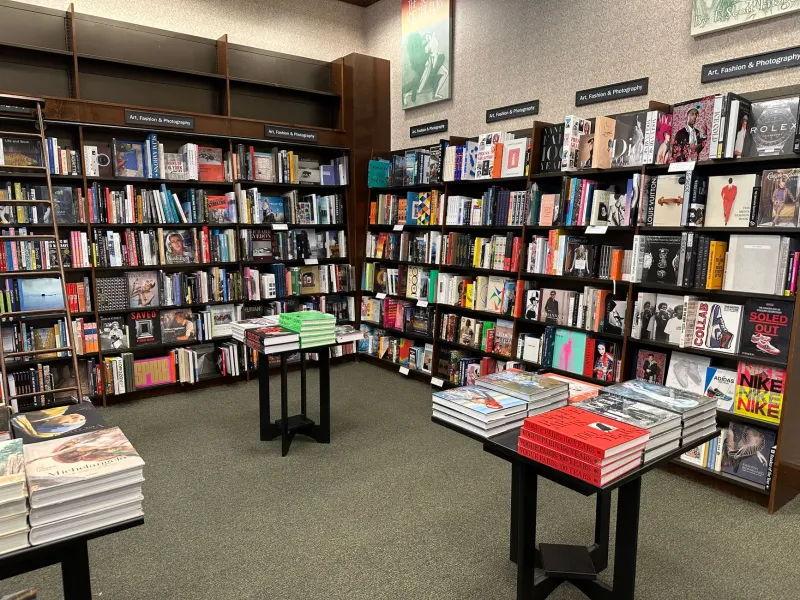
This is not a niche behavior anymore. Across the US — from the MoMA Design Store in Midtown to the shop tucked inside the Walker Art Center in Minneapolis to the gift room at the Hammer Museum in LA — museum retail has quietly undergone a transformation so complete that the old jokes about tacky keychains and overpriced postcards simply don't apply. These spaces have become something else entirely: curated environments where the selection is as considered as anything on the walls upstairs.
What Changed, and When
The shift didn't happen overnight. For most of the twentieth century, museum shops existed to move merchandise. The mission was simple — generate revenue, sell the catalog, maybe push a few prints of the crowd-pleasers. Monet water lilies on a coffee mug. That kind of thing.
But somewhere in the last decade, the curatorial logic that governs the galleries started bleeding into the retail floor. Museums began commissioning original objects rather than just licensing images onto products. They started partnering with working artists, independent publishers, and small-batch designers to produce things that couldn't exist anywhere else. Limited-edition artists' books. Hand-cast jewelry developed in collaboration with artists whose work was on view. Experimental ceramics from studios that don't have commercial representation. Objects with provenance, context, and a reason to exist beyond the transaction.
The MoMA Design Store has been doing this longer than most, but the approach has spread to institutions of every size. Even mid-sized regional museums — the kind with permanent collections built around one or two anchor periods — have started treating their retail space as an extension of their programming rather than a concession stand attached to it.
The Curatorial Logic Behind the Counter
What makes a museum shop selection curatorial rather than just commercial? The answer, according to people who work in this space, has everything to do with the question of why an object is there.
At the best museum shops, every item on the shelf has been selected with the same rigor applied to acquisitions. Does it connect to the institution's collecting focus? Does it represent a maker whose practice aligns with what the museum values? Is it genuinely unavailable elsewhere, or is it just something you could find on Etsy with a logo slapped on it?
The Smithsonian's retail operation, for instance, has leaned hard into American craft — commissioning pieces from makers whose work echoes the historical and cultural themes of the collections. The Art Institute of Chicago's shop carries artists' books that function as genuine extensions of the scholarly publishing the institution is known for. These aren't afterthoughts. They're programmatic choices.
There's also the question of accessibility — and here's where the museum shop does something galleries often can't. A signed, limited-edition print from an emerging artist, sold through a commercial gallery, might carry a price point that shuts out everyone except serious buyers. That same artist, commissioned to produce an edition of 300 for a museum shop, sells at $45. The work is real. The relationship with the artist is real. The barrier is just lower.
Collectors Who've Figured It Out
Talk to collectors who prioritize museum shops and you hear a consistent logic. They're not slumming it. They're sourcing strategically.
One collector based in Chicago — who asked not to be named because she finds the art world's gatekeeping exhausting — described her approach plainly: she visits the Art Institute's shop every time she goes, and she treats it like a gallery visit. She reads the labels. She researches the makers. She's bought artists' books that have since gone out of print and appreciated significantly. "The shop doesn't have the prestige anxiety of a gallery," she said. "Nobody's performing. You just look at the thing and decide if you want it."
That absence of performance matters more than it might seem. Commercial galleries, for all their importance, carry a social architecture that can be alienating — especially for collectors who are newer to the space, younger, or simply not interested in the theater of it. Museum shops offer the same quality of object, often with better contextual information, and without anyone making you feel like you need to justify your presence.
In cities like New York and LA, there are collectors who have built entire shelves around museum shop acquisitions: artists' multiples, hand-bound books, small sculpture editions. Not as a consolation prize for not buying "real" art. As a legitimate collecting practice with its own internal logic.
The Institution's Angle
Museums have their own reasons to take this seriously, and those reasons have sharpened in recent years. As public funding for arts institutions becomes more precarious and endowments face scrutiny, retail revenue matters. But smart institutions have figured out that the gift shop can do two things at once — generate income and extend the museum's mission into the world in a tangible, portable way.
When someone buys an artists' book from a museum shop, they leave with an object that carries the institution's values embedded in it. They might share it, lend it, display it. The museum travels home with them. That's a different kind of impact than a ticket sale, and institutions are increasingly aware of it.
There's also a talent pipeline argument. Commissioning emerging artists and designers for shop editions gives institutions a relationship with makers they might later collect or exhibit. The shop becomes a low-stakes laboratory — a place to test collaborations before committing to a full acquisition or a solo show.
Why This Matters Right Now
We're living through a moment when access to culture is simultaneously expanding and contracting. More people than ever are interested in art. More people are following artists, visiting museums, engaging with design. And yet the commercial art market has never felt more stratospheric, more opaque, or more indifferent to anyone outside its established circles.
The museum shop is one of the few spaces where that gap closes a little. Where the curatorial intelligence of a major institution meets a price point that doesn't require a collector's income to participate. Where the object on the shelf has been thought about, not just stocked.
If you've been walking past the gift shop on your way out, treating it like the museum's version of a souvenir stand, it might be time to slow down. The most interesting thing in the building might be right there by the exit.